How to play college basketball is the question every competitive basketball family eventually asks — and the answer almost always starts with recalibrating expectations. There are over 1,600 college basketball programs across D1, D2, D3, NAIA, and JUCO. The path isn't reserved for McDonald's All-Americans and five-star recruits. It's available to any athlete willing to honestly assess where they fit, play on the right AAU or club team, and run a recruiting process that targets the right level.
The mistake most basketball families make is conflating "college basketball" with what they see on ESPN. March Madness features 68 teams out of 363 D1 programs — and D1 is just one of five division levels. The athlete who isn't getting D1 Power Four attention may be a full-scholarship D2 recruit, a four-year D3 starter, or a JUCO prospect who transfers to a D1 program in two years. Understanding the full landscape turns an overwhelming process into a structured one.
What it takes to play college basketball: an honest assessment framework
Before investing in AAU fees, exposure events, and recruiting services, every family needs to answer the foundational question: at what level can my athlete realistically compete?
The evaluation framework. Basketball evaluation is less measurable-driven than baseball or football. There's no 40-yard dash equivalent that sorts athletes by division. Coaches evaluate a combination of physical tools, skill development, basketball IQ, and competitive production. That said, certain physical benchmarks create baseline expectations by level.
General benchmarks by level (men's):
| Attribute | D1 (Power conference) | D1 (Mid-major) | D2 | D3 / NAIA |
|---|
| Height (guard) | 6'1"–6'5" | 5'11"–6'3" | 5'10"–6'2" | 5'9"–6'1" |
| Height (wing/forward) | 6'5"–6'9" | 6'3"–6'7" | 6'2"–6'6" | 6'0"–6'5" |
| Height (post) | 6'8"–7'0"+ | 6'6"–6'10" | 6'5"–6'9" | 6'3"–6'7" |
| Vertical jump | 32–38+ in | 28–34 in | 26–32 in | 24–30 in |
| Lane agility | 10.5–11.5 sec | 11.0–12.0 sec | 11.5–12.5 sec | 12.0–13.0 sec |
General benchmarks by level (women's):
| Attribute | D1 (Power conference) | D1 (Mid-major) | D2 | D3 / NAIA |
|---|
| Height (guard) | 5'7"–5'11" | 5'5"–5'9" | 5'4"–5'8" | 5'3"–5'7" |
| Height (wing/forward) | 5'10"–6'2" | 5'8"–6'0" | 5'7"–5'11" | 5'6"–5'10" |
| Height (post) | 6'1"–6'5"+ | 5'11"–6'3" | 5'10"–6'2" | 5'9"–6'1" |
These benchmarks are starting points — not sorting hats. A 5'10" guard with elite court vision, consistent three-point shooting, and a motor that doesn't quit will attract mid-major D1 interest despite being undersized. A 6'6" forward who can't shoot outside of eight feet and doesn't rebound aggressively will struggle to earn D2 offers regardless of height. Basketball evaluation weighs production, skill, and IQ as heavily as physical tools — especially at the D2 and D3 levels.
For position-specific evaluation criteria in full detail, our basketball recruiting standards guide covers what coaches look for at every division.
The honest conversation. If your athlete is a 5'8" junior guard averaging 8 points per game in a mid-level high school conference, targeting Big East programs isn't realistic. That same athlete may be a first-team all-conference D3 point guard — starting four years, running the offense, and earning a degree at a school where basketball enhances the college experience rather than consuming it. The goal isn't the highest division label. The goal is the right program.
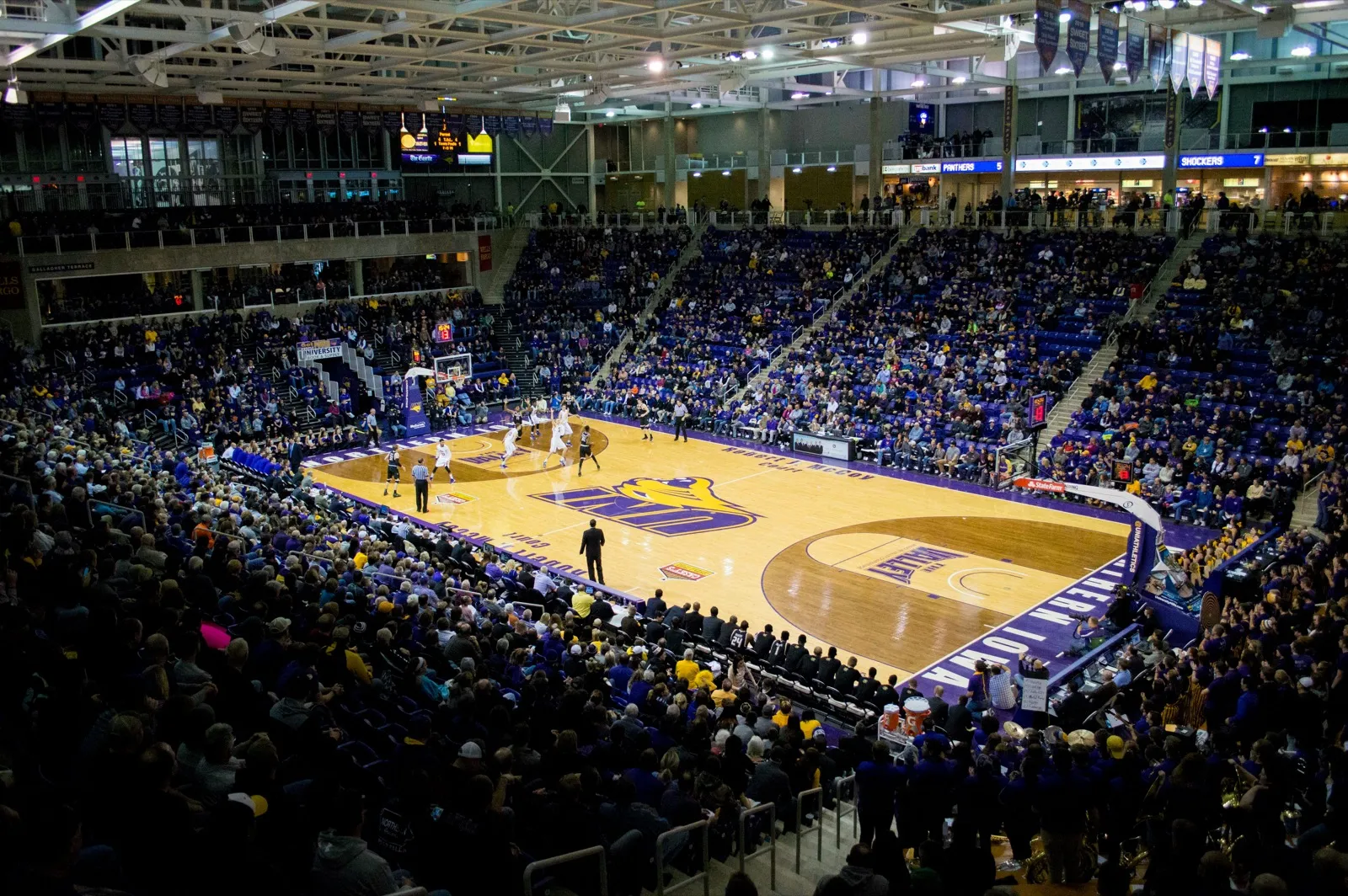
The college basketball landscape by division
D1 basketball (363 programs — men's and women's combined). The highest level of competition. D1 basketball is split into power conferences (Big Ten, SEC, Big 12, Big East, ACC) and mid-major conferences (AAC, WCC, Mountain West, A-10, Missouri Valley, and many others). Power conference programs recruit nationally and attract elite talent. Mid-major programs recruit regionally and produce competitive teams — several mid-major programs reach the NCAA tournament annually and occasionally make deep runs. For the full D1 program landscape, see our D1 colleges for basketball guide.
D2 basketball (300+ programs — men's and women's). Competitive basketball with a regulated 20-hour-per-week athletic commitment. D2 men's basketball offers 10 equivalency scholarships; D2 women's offers 10 as well. The partial-scholarship model at D2 tuition rates often produces lower net costs than D1 walk-on situations. D2 coaches are more accessible and recruit more regionally.
D3 basketball (400+ programs — men's and women's). The largest division by program count. No athletic scholarships, but academic merit and need-based aid can be significant — especially at private liberal arts colleges. D3 basketball ranges from programs that compete at a level comparable to low D2 to programs that are more recreational. The recruiting process is the most accessible: no calendar restrictions, direct coach communication, and genuine playing time opportunities.
NAIA basketball (250+ programs — men's and women's). NAIA men's basketball offers up to 11 scholarships per program; women's offers up to 11 as well. NAIA packages athletic, academic, and need-based aid more flexibly than NCAA divisions. No recruiting calendar restrictions make the process faster and more direct.
JUCO basketball (500+ programs). Junior college basketball is a legitimate pipeline — not a consolation prize. NJCAA Division I programs offer 15 full scholarships per team (the most generous structure in college basketball). JUCO basketball serves athletes who need academic development, additional physical maturity, or exposure to four-year programs. Two years of JUCO basketball followed by a transfer to a D1 or D2 program is a well-established route. For the full JUCO pathway, see our basketball junior colleges guide.
The recruiting timeline and AAU/club system for basketball
Basketball recruiting runs through the AAU and club circuit — the most expensive and most confusing evaluation system in any sport. Understanding which events coaches attend, and at which level, determines whether your investment produces recruiting outcomes or just empties your wallet.
The AAU/club landscape. Nike EYBL, Under Armour Association, and Adidas 3SSB are the top circuits for men's basketball — these draw the heaviest D1 Power conference coaching attendance. For women's basketball, the Nike and Under Armour circuits operate similarly. Below the top circuits, regional AAU organizations and independent club teams provide exposure to mid-major D1, D2, and D3 coaches — but only at events those coaches actually attend.
The July live evaluation period. For D1 basketball, the NCAA live evaluation periods in July are the recruiting calendar's most important window. D1 coaches are permitted to attend AAU and club events during specific July dates, and the concentration of coaching attendance is enormous. If your athlete plays on a team competing in a July evaluation event, the exposure is built into the season. If your athlete's team does not compete during July evaluation windows, D1 exposure is dramatically limited.
The critical timeline:
| Year | What should be happening |
|---|
| Freshman–Sophomore | Play on the most competitive AAU or club team available. Develop skills, strength, and basketball IQ. Build a highlight reel from AAU and high school games. No camp investment needed yet. |
| Sophomore spring/summer | Begin building a target list. Send introductory emails to 20–30 programs with your highlight film and stats. Attend 1–2 college prospect camps at programs you're genuinely interested in. |
| Junior year (July evaluation period) | The peak D1 evaluation window. Compete in July events where coaches are confirmed. Email every target coach before and after each event. Update your film after each high school and AAU season. |
| Senior fall | Early signing period (November). Most D1 rosters are set or nearly set. D2, D3, NAIA, and JUCO opportunities remain available through spring. |
For the full month-by-month recruiting calendar, see the basketball recruiting timeline. For evaluating which camps and events are worth attending, see our guide on basketball recruiting camps.
How basketball scholarships actually work
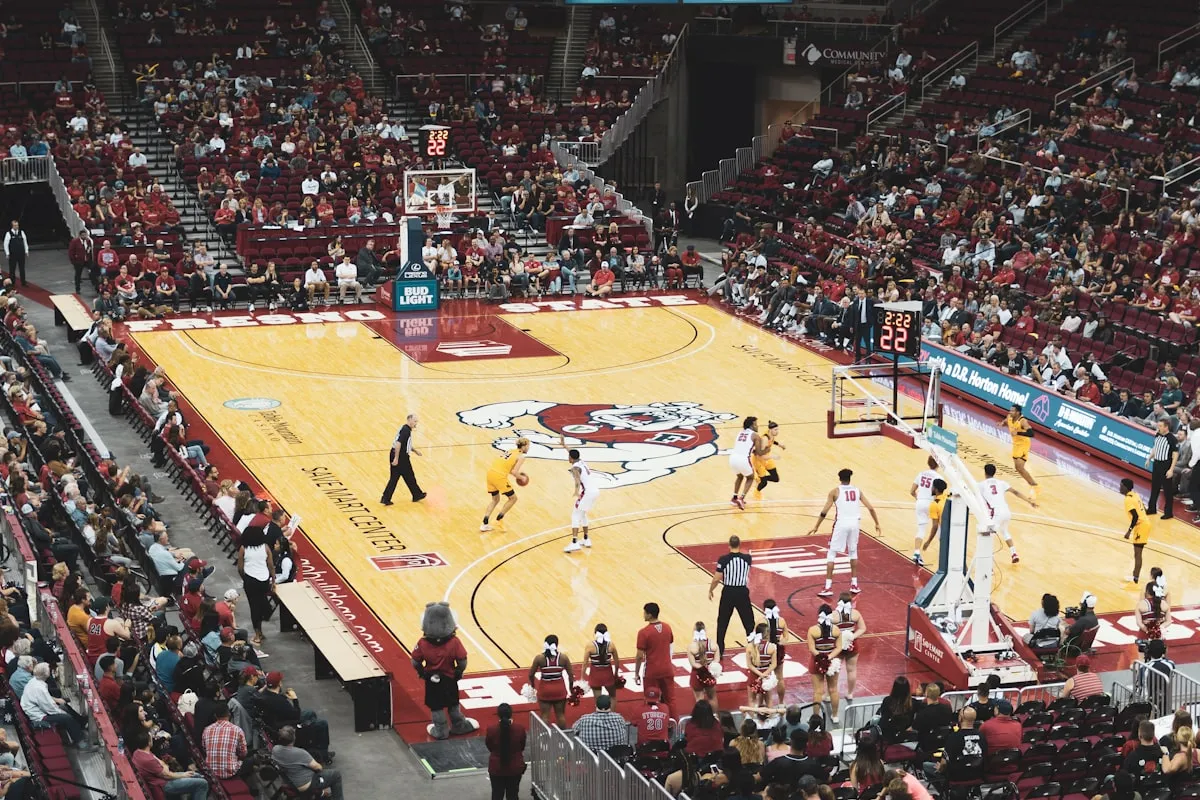
Basketball's scholarship structure differs between men's and women's programs — and between NCAA and NAIA. The House v. NCAA settlement (effective 2025-26) replaced D1 basketball's old headcount system with a roster limit model.
D1 men's basketball: 15 roster-limit scholarships. Under the new roster limit model, D1 men's programs can carry up to 15 scholarship players — up from the old 13 headcount limit. Schools can now offer full scholarships to every rostered player. In practice, most programs still offer full scholarships (basketball rosters are small enough that the budget typically covers every scholarship player at 100%). With 15 scholarships and rosters of 15–17 players, the scholarship-to-roster ratio is more favorable than under the old system, but roster spots remain limited and competition is intense.
D1 women's basketball: 15 roster-limit scholarships. Women's basketball stays at 15 under the new model (matching the old headcount number). With roster sizes of 15–18 players, the scholarship-to-roster ratio remains favorable. The recruiting process for women's basketball has historically been slightly more accessible than men's at the D1 level.
D2 basketball: 10 equivalency scholarships (men's and women's). Those 10 scholarships are split across rosters of 15–18 players, producing partial awards that typically cover 40–70% of cost of attendance. At D2 tuition levels, a 60% scholarship can produce a lower family cost than many FBS walk-on situations.
D3: Zero athletic scholarships. Academic merit and need-based aid at private D3 colleges regularly cover 50–70% of tuition. A D3 school where your athlete receives $30,000 in merit aid is financially equivalent to a $30,000 athletic scholarship.
NAIA: Up to 11 scholarships (men's and women's). NAIA programs combine athletic, academic, and need-based aid more flexibly, often producing total packages that exceed what D2 programs offer per athlete.
JUCO: Up to 15 full scholarships (NJCAA Division I). The most generous per-athlete structure in college basketball. A two-year JUCO scholarship followed by a transfer to a four-year program with additional aid is one of the most cost-effective paths available.
For the complete scholarship math across every division, see the basketball athletic scholarships guide.
The step-by-step path from high school player to college roster
Step 1: Play on the best AAU or club team available (freshman year onward). The team you play on determines which events you compete in and which coaches see you. Ask your club program directly: which evaluation events are on our summer schedule, and which college coaches attend?
Step 2: Build your highlight film (sophomore year). Compile 3–5 minutes of your best plays from high school and AAU games. Show a range of skills — shooting, ball-handling, defense, transition play, basketball IQ. Full-game film should also be available for coaches who request it.
Step 3: Build a realistic target list (sophomore spring). Based on your physical profile, production, and the level of competition you've played against, identify 20–30 programs across 2–3 divisions where the fit is genuine. For the framework, see our guide on how to build a college recruiting target list.
Step 4: Start outreach (sophomore spring through junior fall). Email the head coach at every target program. Include your highlight film, stats, physical measurements, academic information, and your AAU/club schedule. For the template, see our guide on how to email a basketball college coach.
Step 5: Compete in evaluation events (junior summer). For D1 targets, the July live evaluation period is critical. For D2, D3, and NAIA targets, college prospect camps are the highest-value evaluation opportunity — attend 1–2 at programs where there's been prior communication.
Step 6: Evaluate offers and commit (junior fall through senior fall). Compare net cost, playing time opportunity, coaching staff stability, development culture, and academic fit. A full scholarship at a program where your athlete rides the bench is worth less than a partial scholarship where they start and develop for four years.
The bottom line
Playing college basketball is achievable for more athletes than most families realize — but it requires an honest assessment of level, a smart approach to the AAU/club circuit, and a recruiting strategy that matches where your athlete actually competes. The families who succeed are the ones who look beyond the Power Four, understand that D2, D3, NAIA, and JUCO are legitimate and rewarding paths, and invest their time and money in the tier where their athlete genuinely belongs.
For position-specific evaluation criteria, the basketball recruiting standards guide covers what coaches look for. For the complete recruiting timeline, the basketball recruiting timeline maps the process month by month. And for the email that starts the conversation with a college coach, the basketball coach email guide has the sport-specific template and timing. If you're weighing whether a recruiting service belongs in your plan, here's a basketball-specific look at whether NCSA is worth the investment.