Basketball recruiting camps and exposure events cost families thousands of dollars per year — between AAU/travel ball fees ($2,000–$8,000 annually), individual showcases ($200–$500 each), and college-run camps ($150–$500 per event). The families spending this money often can't answer a basic question: which of these events do college coaches actually attend? The answer depends on when the events fall relative to NCAA evaluation periods, what level your athlete is targeting, and whether the event is part of a sanctioned circuit or a privately run camp with no coaching staff attendance guarantee. For the general framework on evaluating any recruiting camp, see our guide on whether college recruiting camps are worth it.
The basketball exposure landscape: AAU circuits, showcases, and college camps
Basketball's exposure ecosystem is more layered than most sports. Understanding the difference between event types is the starting point for spending wisely.
| Event type | Run by | Cost | Who attends | Recruiting value |
|---|
| AAU/travel ball circuits | Nike EYBL, Under Armour Association, Adidas 3SSB, independent AAU | $2,000–$8,000/yr (team fees + travel) | D1 coaches during NCAA evaluation periods; scouts at top circuits year-round | Highest — this is where D1 evaluation happens at scale |
| Showcases and exposure events | Third-party organizers (Pangos, Hoop Group, PHD, regional organizers) | $200–$500 per event | Mix of D1, D2, D3 coaches depending on the event | Variable — verify coach attendance before registering |
| College-run camps | Individual college programs, on campus | $150–$500 | That program's coaching staff | High when the staff has shown interest; low as a cold introduction |
| Elite/invite-only camps | National organizers (McDonald's, Jordan Brand, USA Basketball) | Free or subsidized | National media, D1 coaching staffs | Extremely high — but you don't choose to attend. You get invited. |
AAU and travel ball circuits are the backbone of basketball recruiting. The Nike EYBL (Elite Youth Basketball League) is the most visible — its events draw coaching staffs from every Power Four program. Under Armour Association and Adidas 3SSB serve similar functions. At the elite level, your AAU team's circuit determines which coaches see you play. Below the elite tier, independent AAU teams compete at regional and national tournaments where D2, D3, and mid-major D1 coaches evaluate.
Showcases fill a different role. Individual showcase events (Pangos All-American, Hoop Group Elite, PHD Hoops) provide exposure outside of AAU team competition. They're useful for athletes who need individual evaluation beyond their team context — and for athletes whose AAU teams don't play on the circuits where their target coaches evaluate.
College-run camps offer direct access to a specific coaching staff. When a coach has already expressed interest in your athlete, attending their camp is one of the highest-value investments available. When there's been no prior contact, college camps function more as revenue events.
NCAA live evaluation periods and how they connect to AAU schedules
This is the structural reality that drives everything in basketball recruiting: college coaches can only evaluate prospects in person during NCAA-designated evaluation periods. Outside those windows, coaches aren't in the gym. Any event that falls outside an evaluation period has zero D1 coaching staff attendance — no matter how many coaches the organizer claims will be there.
The key evaluation windows for basketball:
April live period — the first major evaluation period of the AAU season. Coaches attend elite AAU circuit events and select showcases. This is when coaches begin forming their boards for the next recruiting class.
July live period — historically the most important evaluation period in basketball recruiting. AAU Nationals (Nike Peach Jam for EYBL teams, Under Armour Finals, Adidas Finals) and major independent tournaments all fall in this window. More coaching staffs attend more events in July than in any other month.
September and October — NCAA evaluation periods for fall showcase events. These are particularly relevant for athletes who didn't get enough exposure during the summer circuit.
What this means for families: check the NCAA recruiting calendar before paying for any event. An AAU tournament in March that advertises "college coach attendance" is misleading — D1 coaches cannot attend in March. Events that fall within evaluation periods are where the investment pays off. Events outside those periods are practice games.
For women's basketball specifically: the evaluation period structure is similar, but women's basketball has its own set of key events — the Nike Tournament of Champions, Under Armour Next events, and the USA Basketball national team trials circuit. The July evaluation period is equally critical for women's basketball.
College-run basketball camps: worth it or just revenue?
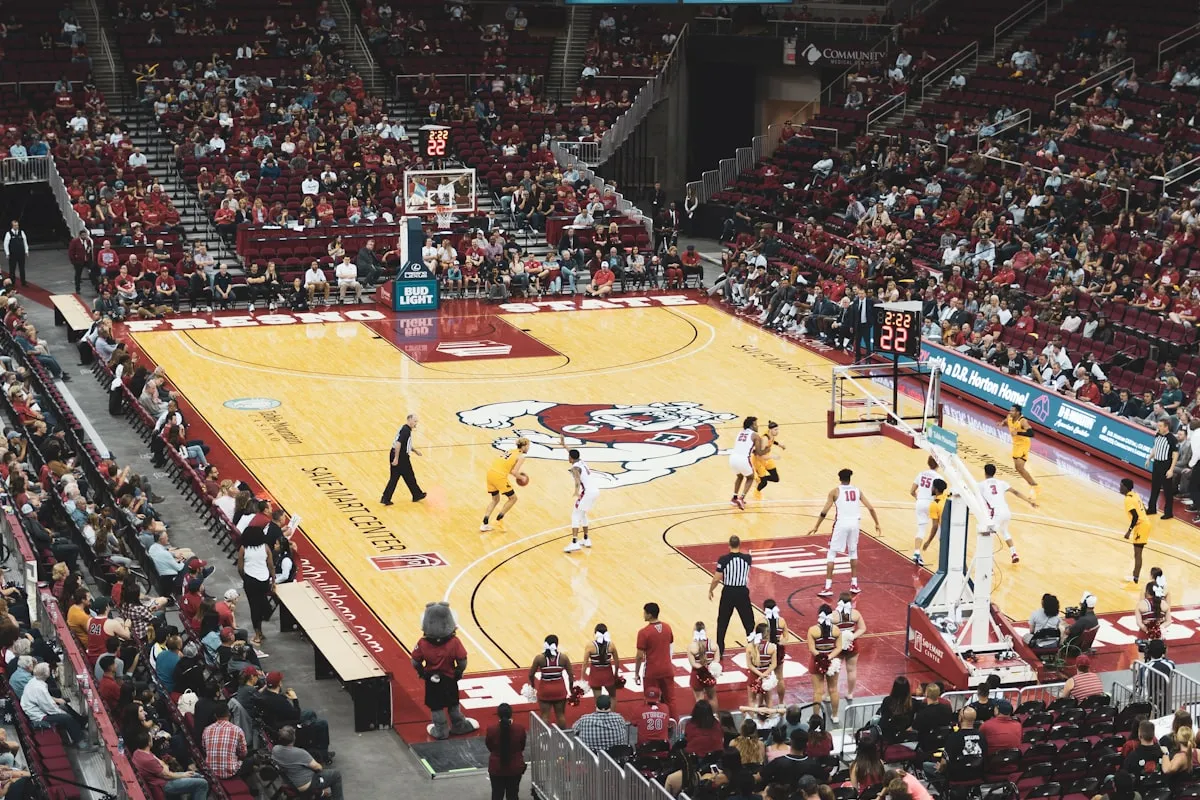
College-run basketball camps are the most misunderstood event type. Families pay $150–$500 expecting a recruiting evaluation. Whether they get one depends entirely on the context.
When a college camp is worth every dollar:
- The coaching staff has already communicated with your athlete (not a mass email — a personal message referencing their game or stats)
- The staff has a roster need at your athlete's position and class year
- Attending the camp is the next logical step in an ongoing recruiting conversation
In these situations, the camp is a live audition for a coaching staff that's already interested. A strong showing can accelerate a recruitment from interest to offer.
When a college camp is a revenue event:
- Your athlete has had zero prior contact with the staff
- The camp drew 200+ athletes and your son or daughter gets lost in the numbers
- The camp invitation came from a mass mailing or purchased contact list
Revenue camps aren't scams — they're legitimate events — but expecting recruiting outcomes from them is unrealistic. The coaching staff is running a business, not scouting.
The decision framework: before registering for any college camp, answer one question: has a coach on that staff communicated directly with your athlete about their recruiting profile? If yes, the camp is high-value. If no, the camp is speculative.
Men's vs. women's basketball exposure differences
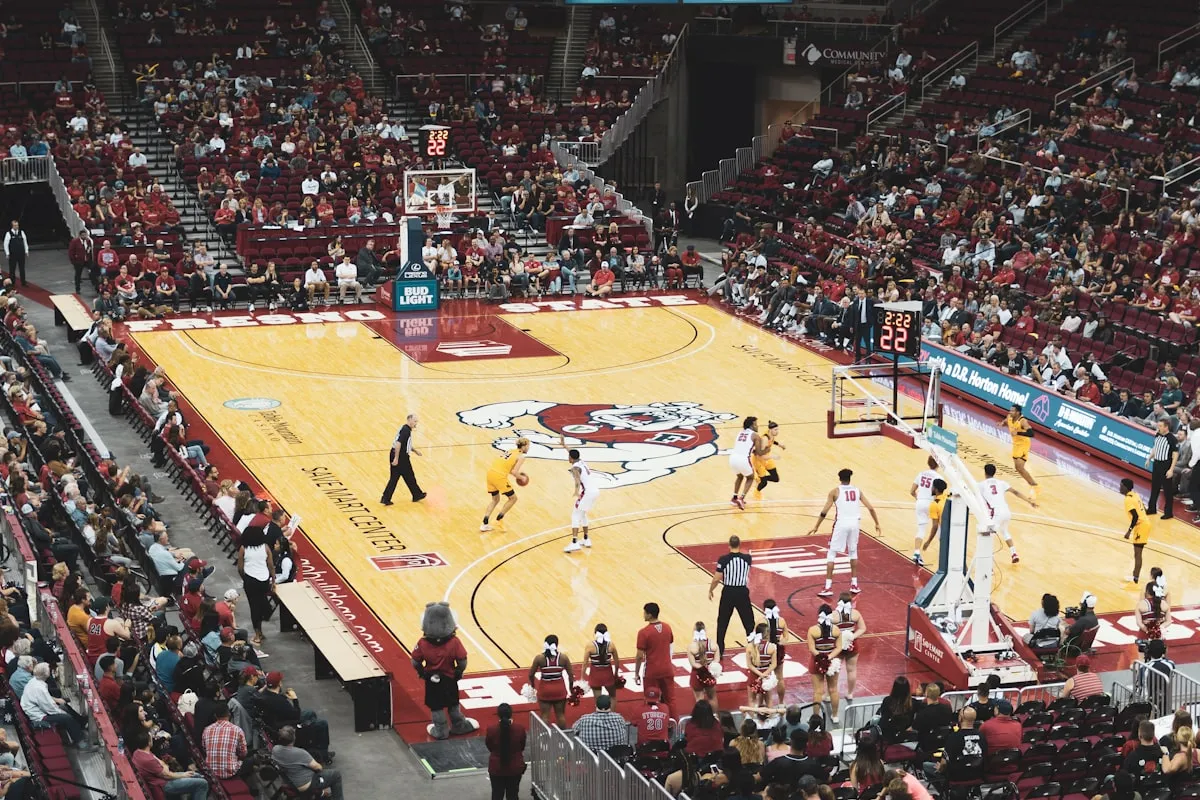
The exposure ecosystems for men's and women's basketball overlap in structure but differ in key details.
Men's basketball has the most established AAU-to-college pipeline in any sport. Nike EYBL is the gold standard — playing on an EYBL team is itself a recruiting credential. Below EYBL, the Under Armour Association and Adidas 3SSB provide strong exposure. Independent AAU teams compete at national tournaments (AAU Nationals, USBA Nationals) where D2, D3, and mid-major D1 coaches evaluate heavily.
Women's basketball has a parallel but less brand-dominated circuit. Nike, Under Armour, and Adidas all run women's circuits, but the evaluation landscape is more distributed across independent showcase events and USA Basketball identification camps. The FIBA age-group pipeline and USA Basketball camps create a national identification system that doesn't have a direct equivalent on the men's side.
Key difference for families: women's basketball recruiting allows more pathways to visibility outside the shoe-company circuits. A strong performance at a regional showcase or a college-run camp can generate significant interest from D1 coaches in women's basketball, whereas men's basketball D1 recruiting is more heavily concentrated in the AAU circuit structure.
How to build a camp and showcase schedule that makes sense
Stop registering for events and start building a calendar. Here's the framework.
Step 1: Identify your athlete's realistic division level.
This determines which events matter. A D1 mid-major prospect needs to be on an AAU team competing in July evaluation-period tournaments. A D3 prospect gets more value from college-run camps at target programs and regional showcases than from elite AAU circuits.
Step 2: Map events to NCAA evaluation periods.
Every dollar spent on exposure should go toward events where target-level coaches can legally attend. Check the basketball recruiting timeline for the calendar structure.
Step 3: Prioritize college camps at programs with existing interest.
If a coaching staff has engaged with your athlete — responded to an email, requested film, mentioned a camp — that camp goes to the top of the list.
Step 4: Limit showcase spending to 2–3 verified events per year.
Before paying for any showcase, ask the organizer: which specific coaching staffs attended last year? How many coaches, from which programs? If they can't answer clearly, your money is better spent elsewhere.
Step 5: Follow up after every event.
An exposure event without follow-up is a wasted trip. Within 48 hours of any camp or showcase, your athlete should email every coach they interacted with. Reference a specific moment from the event. Include updated film. For exactly how to structure that email, see our guide on how to email a basketball college coach.
The budget reality: if your family spends $5,000 per year on AAU and exposure events, that money should be allocated deliberately — not spread across every event that sends a flyer. Three targeted investments outperform ten random registrations.
The bottom line
Basketball recruiting exposure works when it's aligned with your athlete's realistic level and the NCAA evaluation calendar. The AAU circuit is the primary evaluation mechanism for D1 prospects. College-run camps are highest-value when a coaching staff has already shown interest. Showcases are supplementary — useful for athletes who need visibility beyond their AAU team context, but only at events where coaches actually attend.
Build your schedule around evaluation periods, verified coach attendance, and existing recruiting relationships. Spend on events where your athlete's target coaches will be present — and skip the rest. For the full basketball recruiting timeline, including when evaluation periods fall and how the calendar differs by division, see our basketball recruiting timeline. For the scholarship picture that these events connect to, the basketball athletic scholarships guide covers the financial realities at every level. And when exposure leads to coach interest, our guide to emailing basketball coaches covers how to keep the conversation moving. If you're also evaluating whether a paid recruiting service makes sense alongside your camp investment, our NCSA review gives you an honest look at what those services deliver.