Most families hear "D1 football" and picture the College Football Playoff — 100,000-seat stadiums, ESPN College GameDay, coaches making $10 million per year. That picture describes roughly 30 programs. The other 230+ D1 football programs operate in a different reality — and the most important distinction most families miss is that "D1 football" actually means two entirely different things: FBS and FCS. Those four letters determine scholarship structure, recruiting approach, gameday experience, and the realistic path for your athlete. Treating all D1 football as one category is the single most common mistake in football recruiting.
This matters because families who chase "D1" without understanding FBS vs. FCS — and the massive range within each — waste years pursuing programs that were never realistic while ignoring programs where the fit is genuine. There are 260+ D1 football programs in this country. Understanding the landscape is how you find the right 20 to target.
Division I football is split into two subdivisions that function as separate tiers with different rules, different scholarship structures, and different recruiting worlds.
FBS (Football Bowl Subdivision): 134 programs. These are the schools you see on national television — the SEC, Big Ten, Big 12, ACC, plus the Group of Five conferences (AAC, Sun Belt, Conference USA, Mountain West, MAC) and independents. FBS programs operate under a 105-player roster limit and offer full-ride scholarships covering tuition, room, board, and fees. The total athletic budget for a Power Four football program can exceed $50 million. FBS programs recruit nationally, attend major combines and camps, and have recruiting staffs of 10+ full-time assistants plus dozens of analysts and support staff.
FCS (Football Championship Subdivision): 130+ programs. These include the Ivy League, Patriot League, Pioneer League, CAA, Big Sky, Missouri Valley, SWAC, MEAC, and others. FCS programs operate under the same 105-player roster limit as FBS. FCS programs recruit primarily regionally, have smaller coaching staffs, and operate with a fraction of FBS budgets. But FCS football is competitive, physical, and produces NFL players every year.
| Feature | FBS | FCS |
|---|
| Number of programs | 134 | 130+ |
| Roster limit | 105 | 105 |
| Average attendance | 40,000+ (Power 4); 15,000–25,000 (Group of 5) | 5,000–15,000 |
| Recruiting scope | National (Power 4); Regional-to-national (G5) | Primarily regional |
| Coaching staff size | 10+ full-time assistants, analysts, recruiting coordinators | 6–9 assistants, fewer support staff |
| Postseason | Bowl games and College Football Playoff | FCS Playoff (24-team bracket) |
The scholarship distinction is critical. An FBS scholarship is a full ride — period. An FCS scholarship may cover 30%, 50%, or 80% of costs, depending on the program's budget and how many athletes they're splitting scholarship money across. This changes the financial conversation entirely. For the full scholarship math, see our football athletic scholarships guide.
FBS conference tiers and what they recruit
Within FBS, the gap between the top and bottom is enormous. Understanding conference tiers tells you more about a program's recruiting profile than anything else.
Power Four conferences (SEC, Big Ten, Big 12, ACC)
These 68 programs represent the highest level of college football. They recruit nationally, attend every major combine and camp event, and fill their rosters with athletes ranked in the top 500 to 1000 nationally. The talent floor on any Power Four roster is high — even third-string players were often highly recruited prospects in high school. Scholarship packages are full rides under the 105-player roster limit, and facilities, support staff, and NIL infrastructure are at the professional level.
If your athlete is not ranked by 247Sports, Rivals, or On3 — or is not generating interest from multiple Power Four programs by the summer before senior year — these programs are almost certainly not realistic targets. That's not a judgment. It's the math of how Power Four programs build rosters.
Group of Five conferences (AAC, Sun Belt, Conference USA, Mountain West, MAC)
These 66 programs are the most realistic FBS target for strong regional athletes who aren't national recruits. Group of Five programs recruit regionally to nationally depending on the school and conference. A MAC program in Ohio may recruit primarily from Ohio, Michigan, and Pennsylvania. A Sun Belt program in Texas may draw from a five-state radius. The scholarships are still full rides under the same 105 roster limit, the facilities are solid, and the football is competitive — Group of Five teams regularly upset Power Four opponents and compete in quality bowl games.
For athletes who are strong but not elite national prospects, Group of Five programs represent the most accessible path to FBS football with full scholarship potential. Many NFL players came from Group of Five programs.
FBS independents (Notre Dame, UMass, UConn)
A small number of FBS schools compete as independents. Notre Dame operates at the Power Four level in football despite its independent scheduling. The others vary — some are effectively Group of Five level in resources and recruiting.
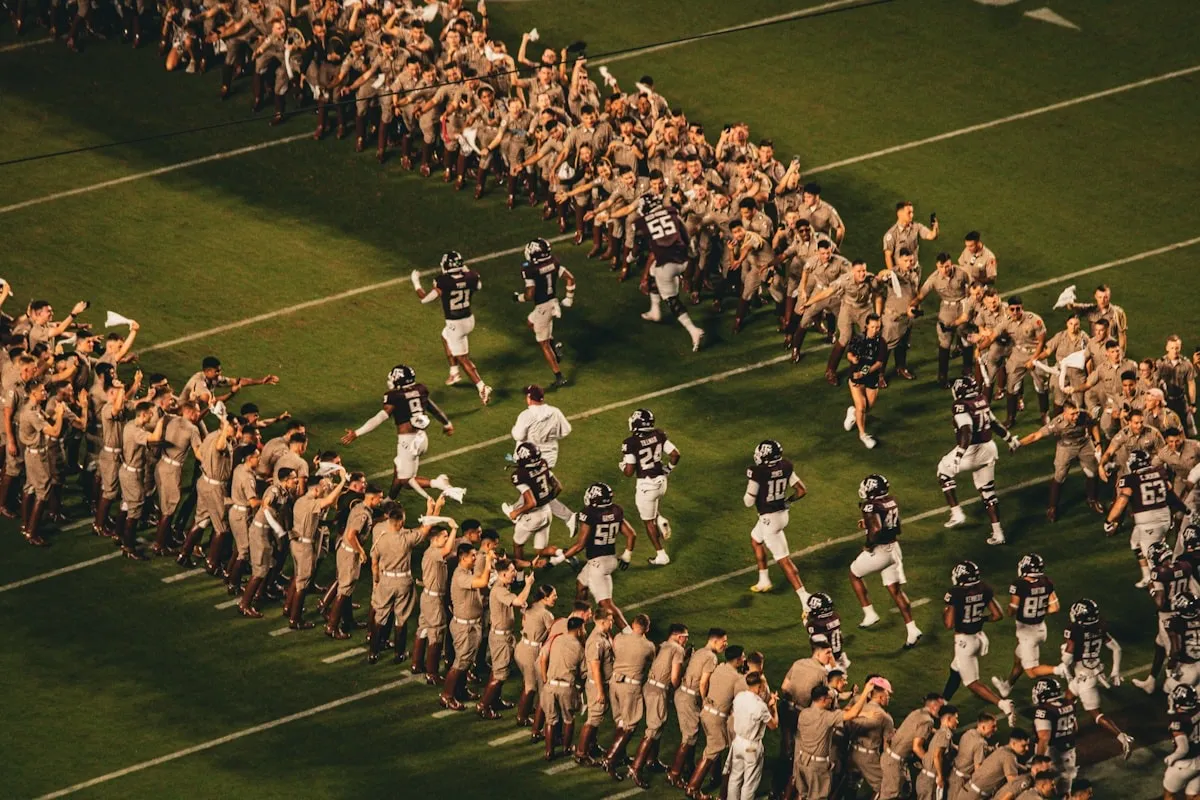
FCS conference landscape and the scholarship differences
FCS football is where the "hidden D1" opportunities exist — and where many families should be focusing their recruiting energy.
Top-tier FCS conferences (CAA, Missouri Valley, Big Sky, Southern Conference)
These conferences produce nationally competitive football. North Dakota State has won 10+ FCS national championships. James Madison moved from FCS to FBS based on competitive success. The CAA regularly sends multiple teams to the FCS Playoffs. Programs in these conferences recruit athletes who, in many cases, could play at the Group of Five FBS level but chose FCS for academic fit, geographic preference, or playing time opportunity.
Mid-tier FCS conferences (Patriot League, NEC, Big South, OVC)
These conferences represent solid Division I football with more moderate recruiting standards. The Patriot League is notable for its academic restrictions — member schools limit athletic scholarships and recruit heavily on academic profile. Athletes with strong academics and solid football ability find excellent fits here.
HBCU conferences (SWAC, MEAC)
Historically Black Colleges and Universities compete at the FCS level with unique cultural traditions and passionate fan bases. HBCU programs have produced NFL talent consistently, and the gameday experience is unlike anything else in college football. Recruiting at HBCU programs serves athletes who value the cultural connection and community alongside competitive football.
The Ivy League: D1 football with zero athletic scholarships.
All eight Ivy League schools compete in FCS football but offer no athletic scholarships of any kind. Financial aid is entirely need-based. The football is competitive, the academic profile is elite, and the recruiting process combines athletic evaluation with rigorous academic screening. For families where academics are the top priority and the athlete has both the academic and athletic profile, Ivy League football is a genuinely unique opportunity.
FCS scholarship math: Under the 105-player roster limit, FCS scholarship money is split across the roster, meaning most athletes receive partial awards. A typical FCS scholarship covers 40–70% of costs. Academic merit aid and need-based grants can supplement the athletic portion, sometimes making the total package competitive with an FBS full ride at a more expensive school. Run the net-cost comparison on every program — don't assume FBS is always the better financial deal.
The honest assessment is the hardest part — and the most valuable.
Start with measurables and film evaluation.
Football has quantifiable benchmarks by position and division. Your athlete's 40-yard dash time, bench press, vertical jump, and position-specific metrics (velocity for QBs, shuttle time for DBs, weight and explosion for linemen) determine which tier is realistic. Compare your athlete's numbers to roster profiles at target programs. The football recruiting standards guide provides the benchmarks by position and division level.
Use Hudl as a reality check.
If your athlete has quality game film on Hudl and has been sending it to coaches for 3–4 months with minimal response from FBS programs but interest from FCS coaches, that's the recruiting market telling you something. Listen to it. An FCS starting role with a partial scholarship is more valuable than an FBS walk-on role with no financial aid.
Coach response rates are data.
If your athlete has emailed 20 FBS programs with personalized outreach and received zero or one response, that's meaningful. If the same emails to FCS programs generated four or five conversations, your target list needs to shift. Consistent silence from one tier combined with genuine interest from another is not failure — it's market feedback.
Ask at camps and prospect days.
If your athlete attends a college prospect day or camp, ask the coaching staff directly: "Based on what you saw today, what level of program is a realistic fit?" An honest answer from a coach who watched your son compete is worth more than a year of guessing. For guidance on which camps matter, see our guide on whether football recruiting camps are worth it.
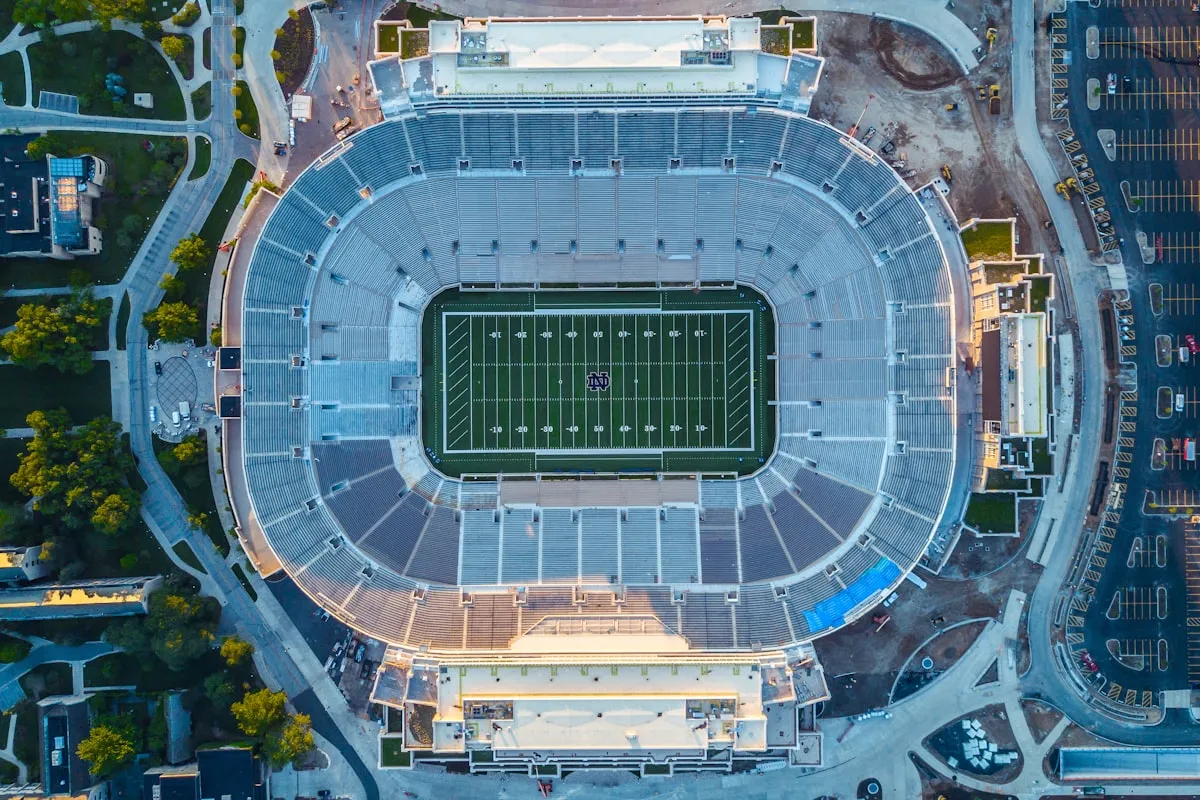
A target list for D1 football should include 15–25 programs across the D1 spectrum — and should likely include D2 programs as well.
Step 1: Identify your athlete's conference tier.
Based on measurables, film feedback, and coach response rates, determine which tier of D1 football is the realistic center of your target list. For most athletes not ranked nationally, that center is Group of Five FBS or top-tier FCS — not Power Four.
Step 2: Filter by geography and academics.
Football rosters are large and scholarship structures vary by subdivision. An FBS full ride at an in-state Group of Five school may be the best financial outcome possible. An FCS partial scholarship at a private school may still leave significant out-of-pocket costs. Run net price calculators on every school before adding it to the final list. For the full financial picture, see our football athletic scholarships guide.
Step 3: Research roster needs at each program.
Check current rosters on athletics websites. How many seniors are graduating at your athlete's position? Has the program added transfer portal players at that position? Is the depth chart thin or deep? A program with two graduating senior linebackers and no portal additions at that position is a better target than one that just signed three linebackers in the previous class.
Step 4: Use the reach-fit-safety framework.
Categorize each program as a reach (lower end of what they recruit), a fit (metrics and academics align), or a safety (your athlete is clearly competitive). If your list is all FBS Power Four reaches, you're setting up for disappointment. If it's all FCS safeties, you may be leaving opportunity on the table. The fit programs should receive the most focused outreach effort.
Step 5: Contact position coaches directly.
Football coaching staffs are large and position-specific. Don't email the head coach or the generic recruiting inbox — find the position coach who recruits your athlete's position (and ideally your geographic area) and email them directly with a personalized message, Hudl link, and measurables. The football coach email guide covers exactly how to structure this outreach.
For the broader framework on building a target list across any sport, our target list guide covers the full methodology.
The bottom line
"D1 football" is not one thing. It is 260+ programs spanning from nationally elite Power Four schools to small FCS programs with 3,000-seat stadiums. The FBS/FCS distinction alone changes the scholarship structure, recruiting pipeline, and gameday experience. The conference tier within each subdivision adds another layer of differentiation. Understanding this landscape — honestly — is how your family identifies the 20 programs where the fit is real.
The most common mistake is not aiming too low. It's spending two years chasing Power Four programs that were never realistic while ignoring Group of Five and FCS programs that had roster spots, scholarship money, and genuine interest. An FCS starter with a solid partial scholarship has a better college experience than an FBS walk-on watching from the sideline.
For the full recruiting timeline — when to start, when coaches evaluate, and how the contact calendar works — see the football recruiting timeline. For the financial picture — roster limits, walk-on realities, and how to compare offers across subdivisions — the football athletic scholarships guide covers the math. And for the broader overview of how football recruiting works from start to finish, our football recruiting guide covers the process. As you build and manage your target list, our review of NCSA for football helps you decide whether paid recruiting help is worth it for your family.