Most families hear "D1 softball" and picture the Women's College World Series in Oklahoma City — sold-out stadiums, ESPN coverage, and programs with budgets that rival professional teams. That picture is accurate for about 20 programs. The other 270+ D1 softball programs operate in a different reality: smaller budgets, regional recruiting, and a level of competition that's demanding and real — but nothing like the SEC-ACC-Big 12 juggernaut that dominates the national conversation.
The phrase "D1 softball" covers an enormous range, and understanding that range is the difference between targeting programs where your athlete has a genuine shot and spending two years chasing programs that were never realistic. A mid-major D1 pitcher at 60 mph has real opportunities — but not at programs that recruit 65+ mph arms exclusively. A position player with a 3.1 home-to-first time and solid defensive range has D1 programs that want her — but not the ones whose rosters are stacked with 2.7-second runners.
The D1 softball landscape: how 300 programs compare
There are approximately 300 NCAA Division I softball programs. That number alone should reframe how you think about D1 — this is not a small, exclusive club. It includes massive state universities with seven-figure softball budgets and small private schools where the softball program shares facilities with three other sports.
Every D1 softball program operates under the same NCAA roster limit: 25 players, with scholarship money split across the roster. The math means most D1 scholarships are partial — typically 25% to 60% of cost of attendance. For the full scholarship breakdown by division, see our softball athletic scholarships guide.
What varies across D1 programs is everything else: coaching staff depth, recruiting budget, facility investment, travel ball network connections, and conference competitiveness. A Power Four program has a head coach, a pitching coach, assistant coaches, a strength coach, and a recruiting coordinator. A low-major D1 program might have a head coach and one assistant. Both are D1.
Conference tiers and what they recruit
Conference affiliation tells you more about a D1 softball program than almost any other single data point.
| Tier | Conferences | Recruiting profile | What families should know |
|---|
| Tier 1 (elite) | SEC, Big 12, ACC, Pac-12 | National recruiting, top-100 prospects, WCWS regulars | These programs recruit 63+ mph pitchers and position players with elite measurables. If your athlete isn't generating interest from multiple Tier 1 programs by junior year, these are reach targets. |
| Tier 2 (strong) | AAC, Sun Belt, Conference USA, Big East, Mountain West, WCC | Regional-to-national recruiting, competitive play, occasional WCWS bids | The sweet spot for strong regional athletes. Pitchers at 58–64 mph and position players with solid but not elite measurables find genuine fits here. |
| Tier 3 (competitive) | Missouri Valley, MAC, A-10, Colonial, Horizon, Big West | Primarily regional recruiting, development-focused, competitive conferences | Coaches at this level are accessible, responsive to direct outreach, and build rosters through relationships rather than showcase circuits. |
| Tier 4 (niche) | Ivy League, Patriot, NEC, America East, SWAC, MEAC, Southland | Academic-focused or resource-limited programs | Ivy League offers zero athletic scholarships. HBCU programs (SWAC, MEAC) are growing softball investment. These programs suit specific athletes — academic priorities, cultural fit, or geographic preference. |
The SEC has historically been the deepest softball conference, regularly sending 6–8 teams to the NCAA tournament. Oklahoma has dominated recent years, but the depth of the conference means even middle-of-the-pack SEC programs recruit at levels that exceed most other conferences' top teams. The Big 12 and ACC are close behind.
But Tier 2 and Tier 3 conferences produce NCAA tournament teams every year. A strong Sun Belt or MAC program that wins its conference tournament earns an automatic bid and can make a regional run. The difference between tiers isn't "good vs. bad softball" — it's "nationally ranked talent vs. strong regional talent."
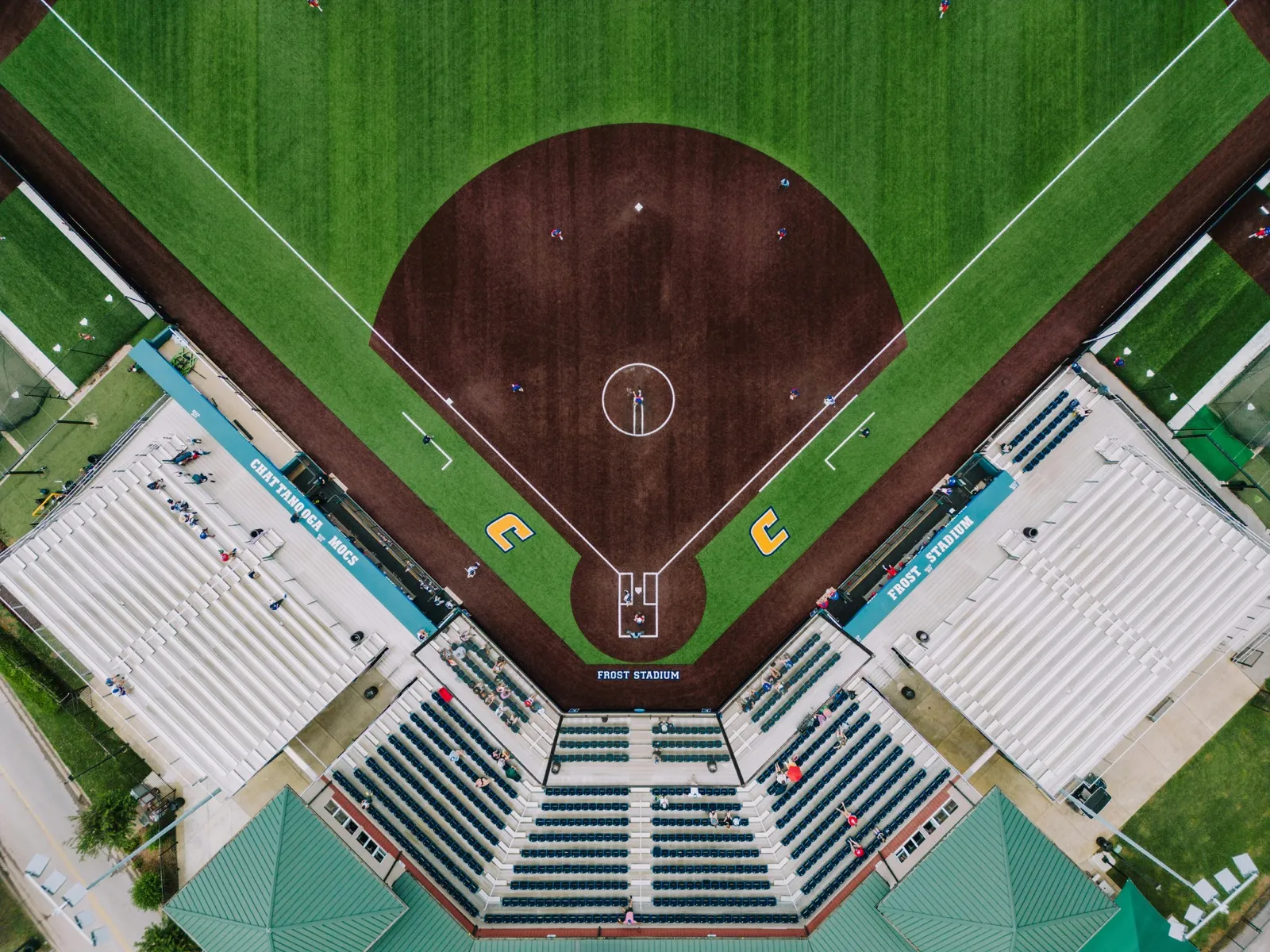
Scholarship availability at D1 softball programs
D1 softball operates under a 25-player roster limit. Here's what the scholarship landscape looks like across conference tiers.
| Conference tier | Typical scholarship range | What it means for families |
|---|
| Tier 1 (Power 4) | 40–80% for recruited athletes | Larger athletic budgets mean bigger per-athlete awards, but competition for those spots is intense. Walk-on opportunities exist but are limited. |
| Tier 2 (strong mid-major) | 25–60% for recruited athletes | Partial awards are the norm. Stack with academic aid for a competitive total package. These programs offer more scholarship flexibility than Tier 1 because fewer athletes on the roster command large shares. |
| Tier 3 (competitive mid-major) | 20–50% for recruited athletes | Smaller awards but often at lower-tuition schools. The out-of-pocket cost can be lower than a larger award at an expensive Tier 1 school. |
| Tier 4 (niche) | 0–40% (Ivy: 0%) | Ivy League provides need-based financial aid only. Other Tier 4 conferences offer partial athletic awards. HBCU programs are investing in softball but budgets are growing. |
The math that surprises most families: a 50% scholarship at a Tier 2 school with $25,000 annual tuition costs your family $12,500/year. A 30% scholarship at a Tier 1 school with $45,000 annual tuition costs $31,500/year. The percentage means nothing without the denominator. Always compare net cost — not scholarship percentage.
D2, D3, and NAIA alternatives worth targeting
If your athlete's honest assessment places them in the lower half of D1 recruiting ranges, these divisions deserve serious consideration — not as backup plans, but as genuine fits.
D2 softball offers 7.2 equivalency scholarships per program. Tuition is typically lower than D1, and the per-athlete scholarship percentage can be comparable. D2 softball is competitive — many D2 programs recruit athletes who were on the lower end of D1 recruiting boards. The regulated 20-hour-per-week athletic commitment provides a more balanced student-athlete experience.
D3 softball offers zero athletic scholarships but substantial academic merit and need-based aid. D3 has the most softball programs of any division (400+), meaning opportunities exist across a wide range of competitive levels. The recruiting process is the most accessible — no calendar restrictions, direct coach communication, and evaluation through personal interaction rather than showcase circuits.
NAIA softball offers up to 12 scholarships with more packaging flexibility. NAIA coaches can combine athletic, academic, and need-based aid more freely, often producing total packages that exceed what mid-tier D1 programs offer. NAIA programs have no recruiting calendar restrictions, making the process faster and more direct.
For the full picture of how divisions compare beyond just athletics, see the D1 vs. D2 vs. D3 breakdown.
Building a softball recruiting target list
A target list for D1 softball should not be 40 random programs. It should be 15–25 programs across 2–3 divisions where your athlete can genuinely compete for a roster spot, afford to attend, and be willing to live for four years.
Start with your athlete's conference tier, not the division label. Based on an honest assessment of measurables — pitching velocity, exit velocity, home-to-first time, defensive metrics — identify which tier from the table above is realistic. Compare against the softball recruiting standards to calibrate. If your pitcher sits 59 mph, the core of the list should be Tier 2 and Tier 3 D1 programs, with D2 programs as genuine options and a few Tier 1 programs as reaches.
Filter by geography and academics early. Softball scholarship money is thin — spread across a 25-player roster, most offers are partial. Academic merit aid and state residency can affect the total cost more than the athletic award. Run the net price calculator on every school before it earns a spot on the list.
Research roster needs. Check current rosters on each program's website. How many seniors are graduating at your athlete's position? Did the program sign a large class at that position? Are there transfer portal additions filling spots? A program graduating three senior outfielders is a better target than one that just added two portal transfers at your position.
Use the reach-fit-safety framework. Within 15–25 programs, categorize each as a reach, fit, or safety based on where your measurables fall against what they recruit. The fit programs should get your most focused outreach effort.
For the full target list framework, see our guide on how to build a college recruiting target list.
The bottom line
"D1 softball" is not one thing. It's 300 programs spanning from perennial WCWS contenders to small private schools with part-time coaching staffs. The label alone tells you almost nothing about whether a program fits your athlete.
The families who navigate this well assess their athlete honestly — using verified measurables, coach feedback, and response rates rather than hope — and build a target list calibrated to the conference tier where their athlete actually competes. That list should include mid-major D1 as a genuine target, D2 and NAIA as real options if the assessment points there, and D3 if the academic and financial picture makes it the best overall fit.
For the position-specific benchmarks that determine division fit, the softball recruiting standards guide has the numbers by position and division. For the scholarship math, the softball athletic scholarships guide covers how scholarship money splits across a roster. For the full recruiting timeline by graduation year, the softball recruiting timeline maps when coaches evaluate and when families should act. If you're wondering whether a recruiting service is worth the cost, our NCSA review gives you a clear-eyed look before you decide.