Texas produces more college football recruits than any other state — and it has the in-state D1 infrastructure to absorb them. With approximately 15 FBS and FCS programs spanning the SEC, Big 12, AAC, Conference USA, Southland, and WAC, Texas families have more in-state D1 football options than families in any other state. The concentration of programs creates a recruiting landscape where staying in-state doesn't mean limiting options — it means navigating a complex tier structure with dramatically different scholarship offers, competitive levels, and gameday experiences.
Understanding every D1 football program in Texas — by conference tier, scholarship structure, and recruiting profile — is the starting point for any Texas family building a target list. For the national D1 football landscape, see our D1 colleges for football guide.
| School | Conference | FBS / FCS | Scholarships | Location |
|---|
| University of Texas | SEC | FBS | 105 roster limit | Austin |
| Texas A&M | SEC | FBS | 105 roster limit | College Station |
| TCU | Big 12 | FBS | 105 roster limit | Fort Worth |
| Baylor | Big 12 | FBS | 105 roster limit | Waco |
| Texas Tech | Big 12 | FBS | 105 roster limit | Lubbock |
| Houston | Big 12 | FBS | 105 roster limit | Houston |
| SMU | ACC | FBS | 105 roster limit | Dallas |
| North Texas | AAC | FBS | 105 roster limit | Denton |
| Rice | AAC | FBS | 105 roster limit | Houston |
| UTSA | AAC | FBS | 105 roster limit | San Antonio |
| UTEP | Conference USA | FBS | 105 roster limit | El Paso |
| Sam Houston State | Conference USA | FBS | 105 roster limit | Huntsville |
| Stephen F. Austin | Southland | FCS | 105 roster limit | Nacogdoches |
| Lamar | Southland | FCS | 105 roster limit | Beaumont |
| Tarleton State | WAC | FCS | 105 roster limit | Stephenville |
| Abilene Christian | WAC | FCS | 105 roster limit | Abilene |
| Texas State | Sun Belt | FBS | 105 roster limit | San Marcos |
Note: Conference affiliations and program classifications shift periodically. Verify current conference membership for any program you're targeting. Programs like Sam Houston State have recently transitioned from FCS to FBS, changing their scholarship structure.
FBS vs. FCS programs in Texas: what's different for recruits
The FBS/FCS distinction matters more for Texas recruits than most families realize — because the scholarship structures are fundamentally different.
FBS programs (105-player roster limit). Every FBS football scholarship is a full ride — tuition, room, board, books, and cost-of-attendance stipend. Under the House v. NCAA settlement, both FBS and FCS now operate under a 105-player roster limit. Texas's FBS programs range from SEC powerhouses (Texas, Texas A&M) to Group of Five programs (UTSA, North Texas, UTEP) where the full ride is identical in structure but the competitive level and national exposure differ dramatically.
FCS programs (105-player roster limit). Like FBS, FCS programs now operate under the same 105-player roster limit. FCS scholarships can still be divided as partial awards, so most FCS football scholarships cover 50–80% of cost of attendance. A 75% FCS scholarship at an in-state Texas school with lower tuition can produce a family cost lower than walking on at an expensive private FBS school like SMU or Rice.
The walk-on calculation. At Texas FBS programs, walk-on spots are common — and many walk-ons eventually earn scholarships. But walking on means paying full tuition (or relying on academic aid) with no guaranteed athletic money. For athletes on the FBS/FCS border, an FCS scholarship that covers 60–70% of a lower-cost public university often produces a better financial outcome than walking on at an FBS program.
Texas high school football is the deepest talent pipeline in the country. Understanding how it feeds into college programs is essential for Texas families.
UIL classifications. The University Interscholastic League (UIL) organizes Texas high school football into six classifications (1A through 6A) based on school enrollment. 6A programs at schools like Allen, Katy, and Southlake Carroll produce dozens of D1 recruits per year. But D1 recruits come from every classification — a dominant athlete at a 3A school is just as recruitable as a solid contributor at a 6A powerhouse.
In-state recruiting is the default. Texas D1 programs recruit in-state first. The volume of Texas high school talent means coaches at Texas A&M, Texas Tech, Baylor, and Houston can fill significant portions of their rosters without leaving the state. For Texas families, this means in-state D1 programs are more accessible than out-of-state equivalents — coaches are already evaluating in your region.
The camp circuit. June camp season at Texas colleges is the primary in-person evaluation window. Attending camps at 2–4 in-state programs where your measurables match is the highest-value action for Texas recruits. Texas programs host some of the largest prospect camps in the country — and coaches from Group of Five and FCS programs attend mega camps at power programs to evaluate athletes those programs don't offer. For camp evaluation, see our guide on whether football recruiting camps are worth it.
Film and Hudl. Texas high school football is extensively filmed and covered. Having a strong Hudl profile is the baseline expectation — not a differentiator. Every competitive Texas recruit has film. What separates recruits is the quality of measurables, the level of competition faced, and the direct outreach to coaches.
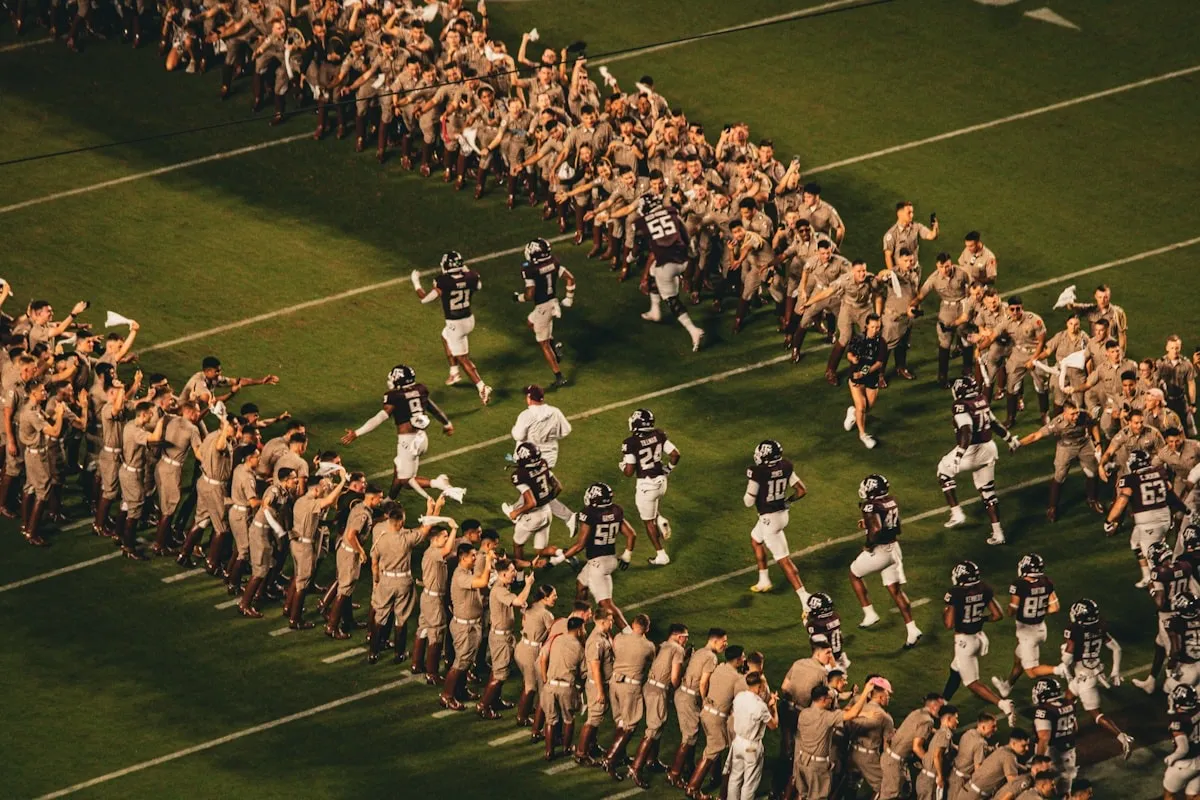
| Tier | Programs | Scholarship reality |
|---|
| SEC / Power conference | Texas, Texas A&M | 105 roster limit — all full rides. National recruiting — these programs recruit the top talent from Texas and nationally. Walk-on programs exist but are extremely competitive. |
| Big 12 / ACC | TCU, Baylor, Texas Tech, Houston, SMU | 105 roster limit — all full rides. Strong regional and national recruiting. More accessible than SEC for strong Texas athletes not in the top 100 nationally. Walk-on to scholarship pathways are real. |
| AAC / Group of Five FBS | North Texas, Rice, UTSA, Texas State, UTEP, Sam Houston | 105 roster limit — all full rides. Recruit primarily from Texas and neighboring states. The most accessible FBS tier for Texas athletes with strong high school credentials but not Power conference measurables. |
| FCS | Stephen F. Austin, Lamar, Tarleton, Abilene Christian | 105 roster limit scholarships split across the roster. Partial scholarships are the norm. Recruit heavily from Texas 3A–5A programs and athletes the FBS programs don't offer. |
For the full scholarship math across all divisions, see the football athletic scholarships guide.
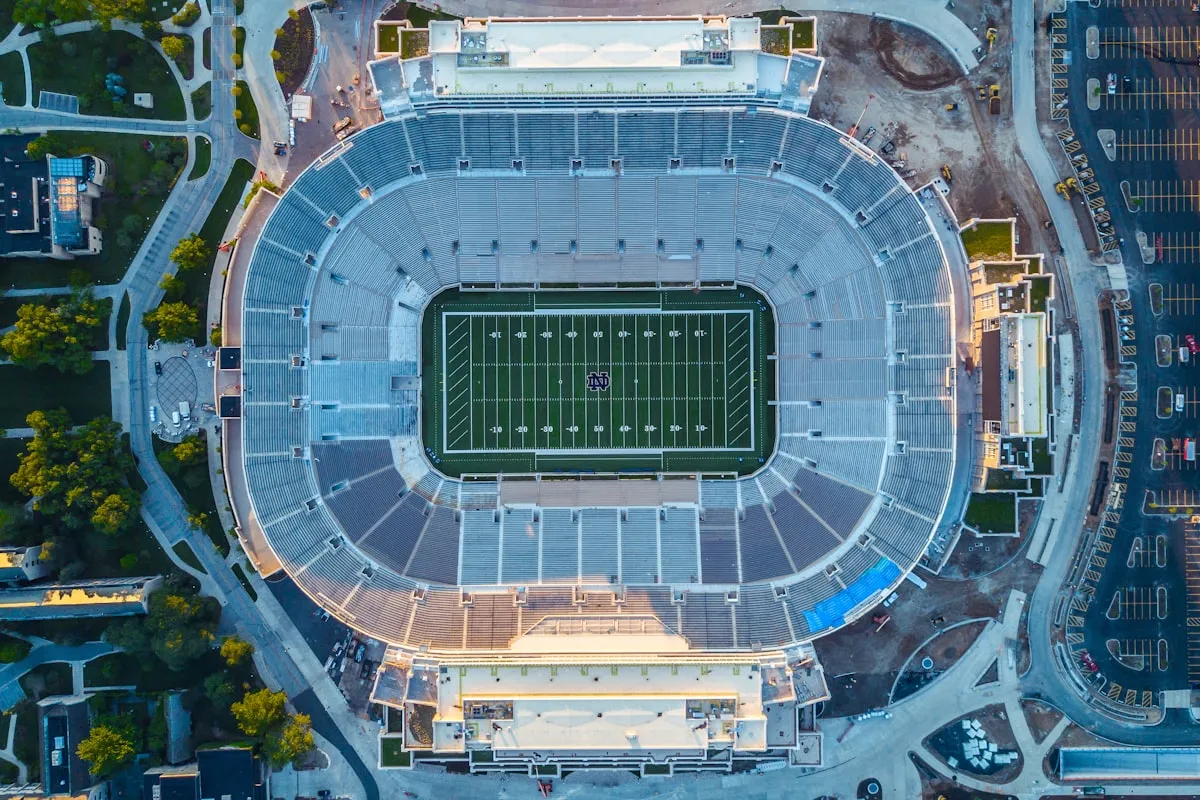
Building a target list from the Texas D1 landscape
Start with your measurables. Your 40-yard dash, shuttle, vertical jump, height, weight, and position-specific metrics determine which tier of Texas D1 football is realistic. A 4.5-second forty at 6'1" and 195 pounds as a receiver puts you in Big 12 and Group of Five conversations. A 4.8-second forty at the same size is FCS and D2 range. For the full benchmarks, see our football recruiting standards guide.
Layer in geography and academics. An in-state FBS school may be more affordable than an out-of-state D2 school even without athletic scholarship money — Texas public university tuition rates are among the most competitive in the country. Factor both athletic fit and financial reality into every program on your list.
Include programs across tiers. A target list with only SEC and Big 12 programs is a wish list, not a strategy. Include 2–3 power conference programs as reaches, 3–5 Group of Five FBS programs as fits, and 2–3 FCS programs as safeties. If D2 and NAIA programs in Texas also fit, add them — the best outcome is having multiple options, not a single long-shot hope.
Don't overlook the FCS tier. Stephen F. Austin, Lamar, Tarleton State, and Abilene Christian recruit heavily from Texas and offer partial scholarships that — combined with Texas public university tuition — produce strong financial outcomes. An FCS starter with a 60% scholarship at a state school is often better positioned financially and athletically than an FBS walk-on at a private institution.
The bottom line
Texas families have an embarrassment of riches when it comes to in-state D1 football options — but the tier structure matters enormously. An SEC full ride and an FCS 60% partial at a state school are both "D1 football in Texas," but the recruiting path, the competitive level, and the financial outcome are completely different.
For position-specific measurable benchmarks that determine which tier fits your athlete, the football recruiting standards guide has the numbers. For the full recruiting timeline — including when FBS contact periods open and how FCS timelines differ — the football recruiting timeline maps the process. And if you're considering a recruiting service to help manage your Texas program list, our NCSA football review covers how the platform fits football's Hudl-driven recruiting model.