How to play college soccer is a question that over 100,000 competitive club soccer families ask every year — and the answer starts with understanding that "college soccer" is not one thing. There are over 1,500 college soccer programs across D1, D2, D3, and NAIA. The path isn't reserved for ECNL national champions and Youth National Team players. It's available to any athlete who honestly assesses where they fit, plays in the right club environment, and runs a recruiting process calibrated to their actual level.
The mistake most soccer families make is assuming that the club system alone will handle recruiting. It won't. Playing on a top ECNL or MLS NEXT team puts your athlete in front of coaches at events — but it doesn't build the target list, send the emails, schedule the campus visits, or compare the scholarship offers. The club system is the evaluation vehicle. The recruiting process is the family's responsibility.
What it takes to play college soccer: an honest assessment framework
Before investing more in club fees and showcase travel, every family needs to answer the foundational question: at what level can my athlete realistically compete?
The evaluation challenge. Soccer doesn't have a single measurable that sorts athletes by division the way pitching velocity does in baseball or the 40-yard dash does in football. Coaches evaluate a combination of technical ability, tactical understanding, athleticism, and competitive production — and the weighting varies by position and coaching philosophy. That makes the assessment harder for families, because there's no single number to chase.
What coaches evaluate, by priority:
| Evaluation area | What coaches look for | How it's assessed |
|---|
| Technical ability | First touch, passing range, ball control under pressure, shooting technique | Game film and live observation at showcases and club events |
| Tactical intelligence | Positioning, decision-making speed, off-ball movement, defensive shape | Full-game film (not highlights) — coaches watch how your athlete plays without the ball |
| Athleticism | Speed, endurance, change of direction, aerial ability, physical strength | Live observation and fitness testing at college camps |
| Competitive production | Goals, assists, and defensive stats against quality competition | Club and high school stats — context matters (league level, team quality) |
| Coachability | Response to instruction, body language, communication with teammates | College prospect camps, ID camps, and live observation |
General competitive benchmarks by level:
| Indicator | D1 (Power conference) | D1 (Mid-major) | D2 | D3 / NAIA |
|---|
| Club level | ECNL, MLS NEXT, GA — top flight | ECNL, MLS NEXT, strong regional | ECNL Regional, strong state league | Competitive state league, strong rec-plus |
| Team ranking | Top 100 nationally | Top 200 nationally / top in region | Top in state / competitive region | Competitive within state |
| Individual recognition | ODP, id2, conference best XI | Conference all-star, regional recognition | State-level recognition | Strong club and high school production |
The club team your athlete plays on provides the single strongest signal to college coaches about competitive level. An ECNL or MLS NEXT player carries immediate credibility with D1 programs. A strong state-league player needs more film and more direct outreach to demonstrate their level — but D2, D3, and NAIA programs are absolutely accessible.
For the full evaluation criteria by position and division, see our soccer recruiting standards guide.
The honest conversation. If your athlete plays on a mid-level state league team and isn't generating interest from multiple D1 programs by junior year, targeting ACC programs is not realistic. That same athlete may be a four-year D2 starter, a D3 all-conference player, or an NAIA impact recruit. The families who succeed are the ones who target the right level — not the one they see on television.
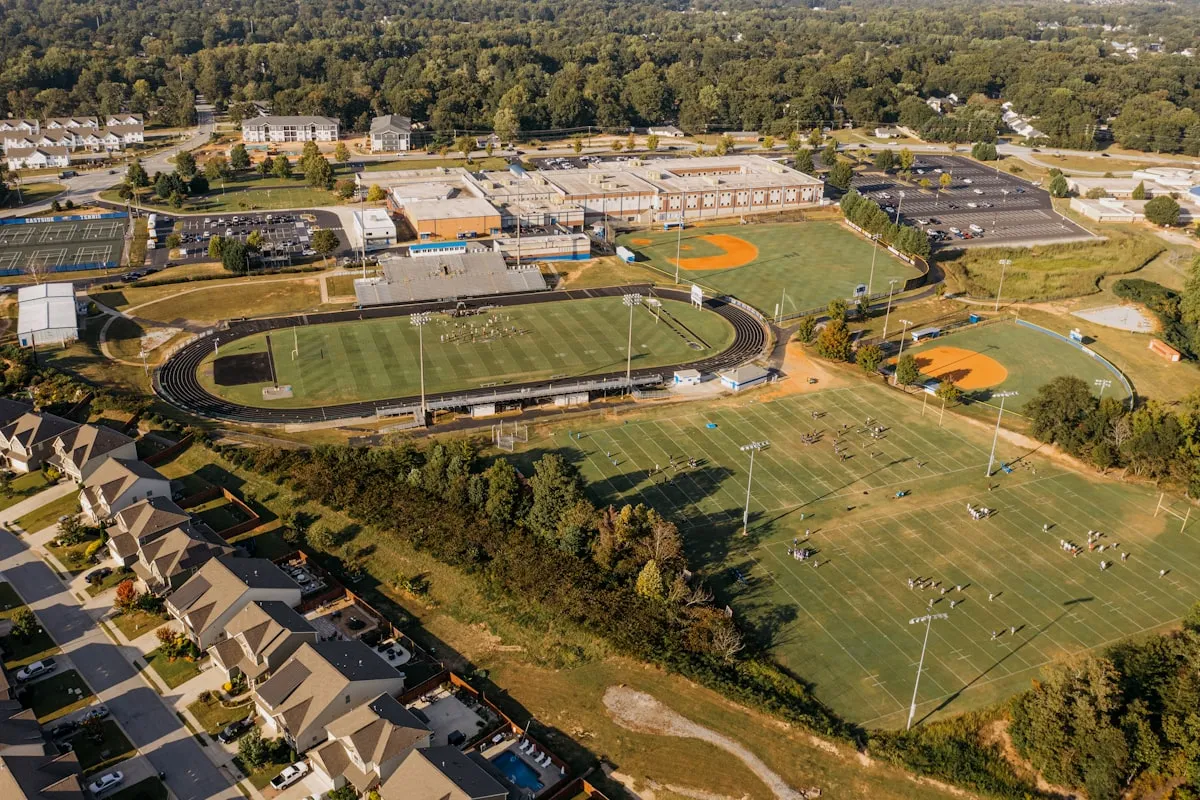
The college soccer landscape by division
D1 soccer (205 men's programs, 335 women's programs). Women's soccer has nearly 65% more D1 programs than men's — a direct result of Title IX creating roster spots. D1 men's soccer is concentrated in specific regions (the Northeast, Mid-Atlantic, and West Coast have disproportionate program density), while D1 women's soccer is distributed more broadly. Power conference programs recruit nationally; mid-major programs recruit regionally and develop athletes the top programs overlook. For the full D1 landscape, see our top D1 soccer schools guide.
D2 soccer (200+ men's programs, 260+ women's programs). Competitive soccer with a balanced student-athlete model. D2 men's soccer offers 9 equivalency scholarships; D2 women's offers 9.9. The partial awards at D2 tuition rates frequently produce lower net costs than D1 walk-on situations. D2 coaches recruit more regionally and are highly responsive to direct outreach. For the D2 landscape, see our Division 2 soccer colleges guide.
D3 soccer (400+ men's programs, 440+ women's programs). The largest division by program count for both men's and women's soccer. No athletic scholarships, but academic merit and need-based aid at private D3 colleges can be substantial. D3 soccer ranges from programs that compete at low-D2 quality to programs that are more recreational. The recruiting process is the most accessible: no calendar restrictions, direct coach communication, and genuine starting opportunities.
NAIA soccer (200+ programs — men's and women's). NAIA men's soccer offers up to 12 scholarships; NAIA women's offers up to 12 as well. NAIA programs package athletic, academic, and need-based aid more flexibly than NCAA divisions. No recruiting calendar restrictions make the process faster and more direct.
The recruiting timeline and club system for soccer
Soccer recruiting starts earlier than almost any other sport — and the club system your athlete plays in determines the recruiting pathway more than in any other sport.
The club system hierarchy. ECNL (Elite Clubs National League), MLS NEXT (formerly Development Academy), and Girls Academy (GA) are the top club platforms. Coaches know these leagues and attend their showcase events as part of their evaluation calendar. Below the top platforms, strong regional leagues and state leagues provide competitive environments — but the automatic coaching attendance that ECNL and MLS NEXT provide doesn't exist at the same level. Athletes in regional leagues need to supplement with college ID camps and direct outreach.
Soccer recruiting starts early. Some D1 women's soccer programs begin tracking athletes as early as sophomore year, and the contact window opens September 1 of junior year for D1. Families who wait until senior year to start the recruiting process have missed the primary evaluation window for most D1 programs. D2, D3, and NAIA recruit later and provide more flexibility — but even at those levels, starting junior year is optimal.
The critical timeline:
| Year | What should be happening |
|---|
| Freshman | Play on the most competitive club team available. Develop technically and tactically. No recruiting investment needed yet — focus on becoming a better player. |
| Sophomore | Begin building a target list of 20–30 programs across 2–3 divisions. Start filming full games (not just highlights). Send introductory emails to target coaches. Attend 1–2 college ID camps at programs you're genuinely interested in. |
| Junior year | The peak D1 evaluation window. Compete in ECNL/MLS NEXT showcases or attend college ID camps where target coaches are confirmed. Email every target coach before and after each event. Unofficial visits to top-choice programs. D1 coaches can initiate contact starting September 1. |
| Senior fall | Early signing period (November). Most D1 rosters are largely set. D2, D3, and NAIA opportunities remain available through spring and summer. |
For the full month-by-month recruiting calendar, see the soccer recruiting timeline. For evaluating which camps and showcases are worth attending, see our guide on soccer recruiting camps.

How soccer scholarships actually work
Soccer's scholarship structure changed significantly under the House v. NCAA settlement effective 2025-26 — and the new numbers reshape the financial picture for both men's and women's programs.
D1 men's soccer: 28 roster-limit scholarships. Under the new roster limit model, D1 men's programs can carry up to 28 scholarship players — a major increase from the old 9.9 equivalency limit. Schools can now offer full scholarships to every rostered player. In practice, most programs still distribute their budget as partial awards, because roster sizes of 25–30 players fall within the scholarship count. But the math has improved dramatically: partial awards are now larger, and full rides are more common than under the old system. Walk-on spots with zero athletic aid are less prevalent than before.
D1 women's soccer: 28 roster-limit scholarships. Women's soccer also moves to 28 roster-limit scholarships — up from the old 14 equivalency limit. With roster sizes of 25–32 players, most scholarship athletes now receive 70–100% of cost of attendance. The financial picture for women's soccer has improved significantly under the new model.
D2 soccer: 9 scholarships (men's) / 9.9 scholarships (women's). Split across similar roster sizes, D2 awards typically cover 25–50% of cost of attendance. At D2 tuition levels, the net family cost is often lower than a D1 walk-on situation at a more expensive school.
D3: Zero athletic scholarships. Academic merit and need-based aid at private D3 colleges regularly cover 50–70% of tuition. The total cost at a D3 school with strong aid can be lower than a D1 school with a partial athletic award.
NAIA: Up to 12 scholarships (men's and women's). NAIA programs combine athletic, academic, and need-based aid more flexibly, often producing total packages that exceed what D2 programs offer per athlete.
For the complete scholarship math by division, see the soccer athletic scholarships guide.
The step-by-step path from club player to college roster
Step 1: Play on the best club team available (freshman year onward). The team you play on determines which coaches see you and which showcase events you compete in. If your club doesn't compete in events with college coaching attendance, supplement with college ID camps.
Step 2: Build your film (sophomore year). Film full games — not just highlights. Coaches want to see how your athlete plays without the ball, how they respond to losing possession, how they communicate defensively, and whether they compete for 80 minutes. A 3–5 minute highlight reel gets a coach's attention; full-game film is what earns an offer.
Step 3: Build a realistic target list (sophomore spring). Based on your club level, competitive production, and academic profile, identify 20–30 programs across 2–3 divisions where the fit is genuine. Include programs at every tier where your athlete can compete for playing time. For the framework, see our guide on how to build a college recruiting target list.
Step 4: Start outreach (sophomore spring through junior fall). Email the head coach at every target program. Include your highlight film, full-game links, stats, club team and league, physical measurements, academic information, and your upcoming showcase schedule. For the template, see our guide on how to email a soccer college coach.
Step 5: Attend ID camps and showcase events (sophomore summer through junior year). College ID camps at target programs are the most direct evaluation opportunity in soccer. Prioritize camps where prior communication exists. For ECNL and MLS NEXT players, the showcase events on your club schedule provide built-in exposure — email target coaches before each event with your jersey number and game schedule.
Step 6: Evaluate offers and commit (junior year through senior fall). Compare net cost, playing time opportunity, coaching philosophy, development culture, and academic fit. A 50% scholarship at a program where your athlete starts four years is worth more than a 25% scholarship at a more prestigious program where they compete for minutes with five other recruits at their position.
The bottom line
Playing college soccer is achievable for more athletes than most families realize — but it requires an honest assessment of competitive level, a smart approach to the club system, and a recruiting process that starts earlier than most expect. The families who succeed are the ones who understand that the club team provides the evaluation platform while the recruiting process is the family's job, and who build a target list calibrated to where their athlete genuinely fits.
For position-specific evaluation criteria, the soccer recruiting standards guide explains what coaches look for. For the complete recruiting timeline, the soccer recruiting timeline maps the process month by month. And for the email that starts the conversation with a college coach, the soccer coach email guide has the sport-specific template and timing. If you're weighing whether a recruiting service belongs in your plan, here's a soccer-specific look at whether NCSA is worth the investment.