A softball recruiting email needs to accomplish something in under 30 seconds: convince a coach to watch your athlete's film. Softball coaches — especially at D1 programs — receive hundreds of recruiting emails during peak periods, and the emails that survive the initial scan are the ones that lead with verified measurables, include a film link that works, and demonstrate that the family understands how softball recruiting actually operates.
Softball shares DNA with baseball recruiting in its emphasis on measurables, but the differences matter. The travel ball ecosystem is different (PGF, USSSA, and USA Softball drive the showcase circuit, not Perfect Game or PBR). The recruiting timeline is earlier for D1 — some programs track athletes by freshman year. And the position-specific details coaches want — slap hitting speed for lefties, pitching velocity with movement quality, pop time for catchers — require a sport-specific email that generic templates can't provide.
If you've read our guide to how to email a college coach, you have the general framework. This article gives you the softball-specific version.
Who to email on a college softball staff
Softball coaching staffs are smaller than football or baseball, but the right contact still matters.
D1 programs:
Most D1 softball programs have a head coach, a pitching coach, and one or two assistant coaches. Unlike football's sprawling staff, softball coaches share recruiting duties — but there's usually one assistant designated as the recruiting coordinator. Check the program's staff page for titles like "Associate Head Coach," "Recruiting Coordinator," or "Assistant Coach/Recruiting." If a clear recruiting lead is listed, email them. If not, email the head coach directly — D1 softball head coaches are more hands-on in recruiting than head coaches in larger-staff sports.
For pitchers specifically: Email the pitching coach and the head coach. A pitching coach who sees a 63 mph fastball with a strong change-up will flag that email immediately. Including the pitching coach as a direct recipient — not just the head coach — accelerates the evaluation.
D2 programs:
Email the head coach directly. D2 softball staffs are small — typically a head coach and one assistant. The head coach handles most recruiting and is accessible and responsive to direct outreach.
D3 programs:
Email the head coach. At D3, the head coach runs recruiting personally and may be the only full-time staff member. D3 coaches actively want to hear from recruits because they don't have scouting budgets or recruiting services feeding them prospects. Your email may be the most important step in the recruiting process.
NAIA and JUCO programs:
Email the head coach. Both NAIA and JUCO staffs are lean, and the head coach handles recruiting directly. NAIA coaches are particularly responsive — no calendar restrictions mean they can engage immediately.
What softball coaches want to see in the first email
Lead with the information coaches use to make their initial evaluation. Save the personal narrative for the conversation that follows.
For pitchers:
Fastball velocity (peak and sitting), movement pitches with descriptions (rise ball, drop ball, curve, change-up), and spin rate if available from Rapsodo or similar technology. Include where and when velocity was measured — "62 mph at PGF National Qualifier, July 2025" is a data point. "Throws 62" without context is a claim. Coaches also want to know arm slot, pitch count capacity, and whether your athlete can pitch both games of a doubleheader.
For catchers:
Pop time (home to second), arm velocity, and exit velocity. Pop time is the single most filterable metric for catchers. Include it in the subject line if it's strong. Beyond measurables, briefly mention game management skills — coaches will verify these through film and coach references.
For position players (infielders, outfielders):
Exit velocity, home-to-first time (right-side and left-side if applicable), arm velocity, and the most recent season batting stats (AVG, OBP, SLG). For left-handed hitters who slap, the home-to-first time is the headline metric — include it prominently. For middle infielders, defensive range and quick hands matter as much as hitting; mention both.
For all positions:
Height, weight, throwing arm, batting side, graduation year, GPA, test scores, travel ball team and organization, and NCAA Eligibility Center ID. The travel ball team matters more in softball than in most sports — coaches know which organizations develop college-ready players. A name like "Beverly Bandits," "Texas Glory," or "Georgia Impact" provides immediate context about competitive level. An unknown local team doesn't mean your athlete isn't good — it means the coach needs more data to evaluate, so the measurables and film carry even more weight.
The softball coach email template
Subject line: [Name] | [Grad Year] | [Position] | [Key Measurable] | [State]
Examples:
Sofia Martinez | 2027 | P | 63 mph FB / Rise / Change | Texas2027 SS/Slap | 2.7 H-1st | 65 mph Exit Velo | Emily Chen | CA2027 C | 1.82 Pop | 64 mph Exit Velo | Jordan Williams | FL
The subject line should include your position and the measurable that defines it. A coach scanning pitcher emails decides whether to open based on velocity. A coach evaluating catchers looks for pop time. Put the number that matters most for your position front and center.
Email body:
Coach [Last Name],
My name is [First Last], a [graduation year] [position] at [High School] in [City, State]. I play travel ball for [Team Name] ([Organization — e.g., PGF, USSSA]).
I'm reaching out because [one specific, genuine reason you're interested in this program — their pitching development, a WCWS run, an academic program, a coach's background with developing players at your position].
Measurables:
- [Pitching velocity / Exit velocity / Home-to-first / Pop time — with source and date]
- [Movement pitches or additional position-specific metrics]
- [Most recent season stats: ERA/IP/K/BB for pitchers, AVG/OBP/SLG for hitters]
Academics:
- GPA: [weighted/unweighted]
- SAT/ACT: [score]
- NCAA ID: [number]
- Intended major: [if known]
Film: [Direct link — YouTube or skills video]
Upcoming schedule: [Next 2-3 showcase events or travel ball tournaments with dates and locations]
My travel ball coach is [Name] ([Organization]), and can be reached at [email] or [phone]. My high school coach is [Name] at [email] or [phone].
Thank you for your time, Coach.
[Full Name]
[Phone Number]
[Email Address]
Three softball-specific notes on this template.
First, the travel ball coach reference is more important in softball than in almost any other sport. College coaches call travel ball coaches to verify measurables, get honest evaluations, and assess whether an athlete's tournament performance matches the email claims. Include your travel ball coach prominently — and make sure they know they may receive calls.
Second, the "upcoming schedule" section serves a critical purpose in softball because coaches evaluate at travel ball tournaments. Listing upcoming PGF qualifiers, USSSA events, or national-level tournaments with dates gives an interested coach an immediate action item: come watch your athlete compete live.
Third, the film link for softball should include both skills video and game footage. Skills video shows mechanics in isolation — pitching delivery from multiple angles, hitting from both sides, defensive footwork. Game footage shows how your athlete performs under competitive pressure. Include both.
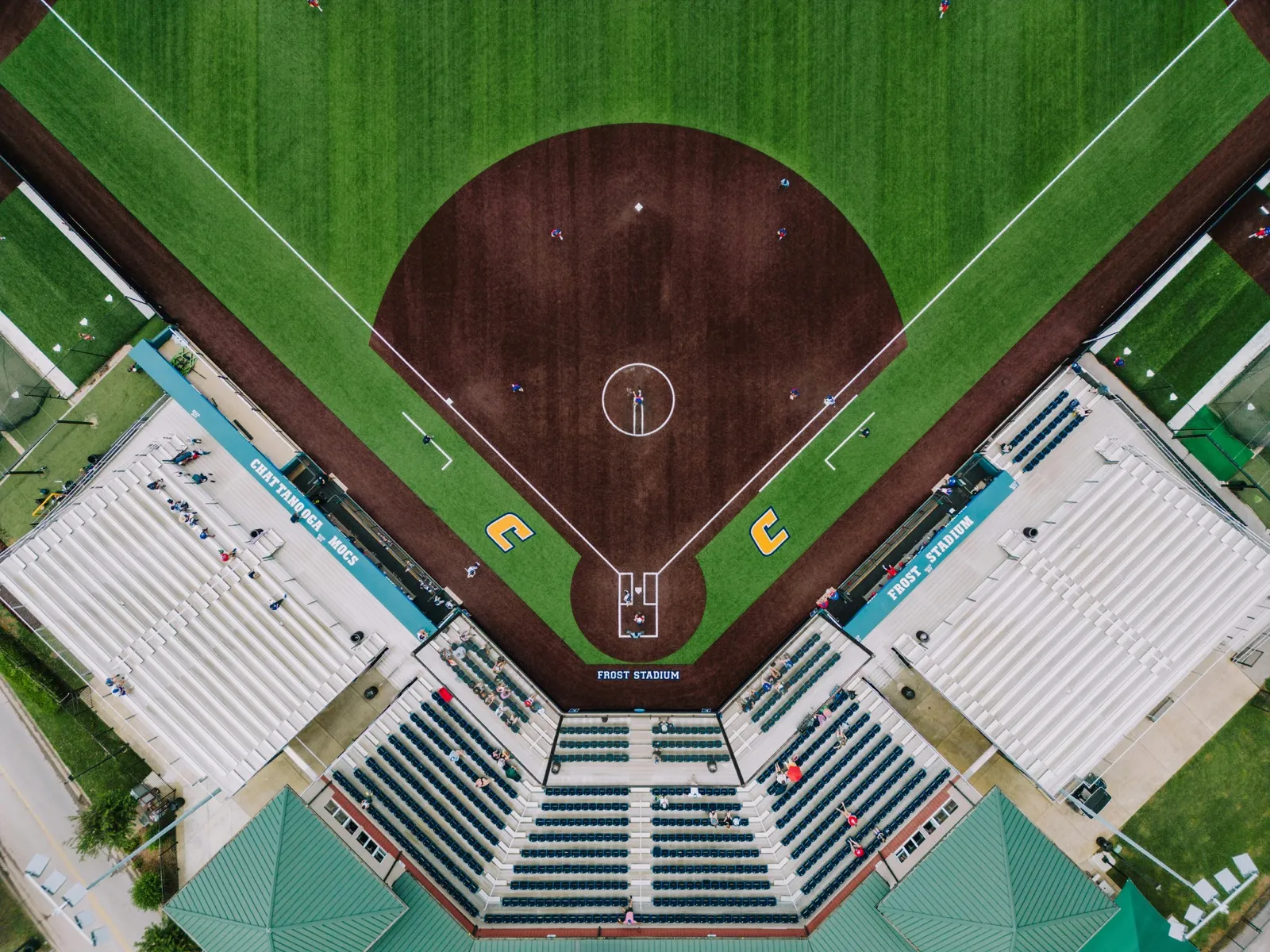
Softball's recruiting timeline is earlier than most families expect, and email timing should align with the travel ball showcase calendar.
Before September 1 of junior year (D1):
D1 coaches cannot initiate contact. But your athlete can email at any time — and in softball, starting early matters. Some D1 programs track athletes from freshman year and build informal relationships well before the contact window opens. An introductory email sent in spring of sophomore year, timed to coincide with early travel ball season, puts your athlete on D1 radars at exactly the right moment.
For D2, coaches can initiate contact starting June 15 after sophomore year. An email sent in spring of sophomore year with verified measurables and a summer showcase schedule positions your athlete for D2 conversations when the window opens.
During travel ball season (June–July):
This is the peak showcase window when coaches are actively evaluating. Email target coaches two weeks before each major tournament with your schedule, jersey number, and measurables. After the tournament, follow up within 48 hours with performance highlights. The email that arrives while a coach is actively scouting the showcase circuit carries more weight than one that arrives in December.
After September 1 (junior year):
D1 communication opens both ways. Coaches who've been tracking your athlete will initiate contact. For athletes who haven't received D1 attention, intensify D2 and D3 outreach. These levels recruit later and are highly responsive to well-crafted emails from athletes who include complete information.
D3 and NAIA — anytime:
No calendar restrictions. Email when you have strong measurables to share. Don't wait for a specific window. For the full picture of when recruiting activity peaks at each division, see our softball recruiting timeline.
Follow-up strategy after your first email
Follow up after 10–14 days with new information. A new measurable, a strong tournament performance, or updated film gives a coach a reason to re-engage. "Since my last email, I competed at [event] and my exit velocity was measured at 68 mph, up from 64 in March" is the kind of update that moves an athlete up a recruiting board.
Send post-tournament updates the same weekend. If your athlete pitches a strong game at a showcase event on Saturday, email your target coaches Saturday evening with updated stats and a clip. Timeliness matters — coaches review showcase results over the weekend.
Space ongoing communication every two to three weeks. Each follow-up needs substance: new measurables, new film, improved stats, a strong tournament result, or an upcoming showcase schedule. Repetitive "checking in" emails read as noise.
Read the patterns. If your athlete has emailed 30 programs with strong measurables and received zero responses after six to eight weeks, the division targeting may be too high, the measurables may not match what those programs recruit, or the film doesn't demonstrate what coaches need. Adjusting the target list in junior year beats discovering a mismatch in senior year. For a deeper look at what coach responses actually signal, see our guide to reading college coach signals.
The bottom line
Softball recruiting rewards the email that leads with data — velocity, exit velocity, pop time, home-to-first — and follows with film that confirms what the numbers promise. The coach who opens your email decides in seconds whether to click the film link. Verified measurables from recognized showcases, the right contact on the staff, and one genuine line about why this program are what make that click happen.
Start outreach before the numbers are perfect. Update coaches as measurables improve. Time your emails to the travel ball showcase calendar. And include your travel ball coach's contact information — because the call a coach makes to verify your athlete's profile is often the step that converts an email into a campus visit.
For the full overview of the softball recruiting timeline across divisions, see our softball recruiting timeline. For the measurables that determine which division fits your athlete, the softball recruiting standards guide has the benchmarks by position. And when coaches respond, understanding what their signals mean helps you figure out which conversations are real and which are polite non-answers. If you're weighing whether to handle outreach yourself or pay a service to manage it, here's how the major recruiting platforms compare — including what they actually do on your behalf.