If you’re searching for NCSA hockey, you’re trying to make a high-stakes budget decision. In hockey, this is not just “service vs no service.” It is “service vs the actual pipeline coaches recruit from.”
That pipeline is unusually structured. Men’s D1 recruiting is heavily junior-driven, women’s pathways are more distributed, and both require direct communication and event-level exposure. So the right question is not whether NCSA is good or bad. The right question is whether it’s your primary lever or just a secondary support tool.
What NCSA offers hockey players
NCSA gives hockey families what it gives every sport: a recruiting profile, coach database access, messaging workflow, and tiered guidance options. For families that need structure, that can be useful. A centralized system can reduce chaos when you’re tracking schools, deadlines, coach communication, and video links.
The limitation is that NCSA does not control hockey’s core evaluation channels. It can help you stay organized inside the process, but it does not replace where coaches make decisions.
At minimum, hockey families should evaluate NCSA as one tool among several:
- Process support and accountability
- Communication organization
- Visibility layer
- Educational support
Before paying, compare that against what you can already do through direct outreach and hockey-native channels. For broad service context, start with our full NCSA review.
Hockey's unique recruiting pipeline (juniors, showcases, advisors)
This is the section most families miss.
For men’s D1, public league data is clear. USHL reported 365+ current players committed to NCAA D1 and said about 80% of league players were D1-committed in that snapshot. NAHL reports 193+ NCAA commitments in-season, with about 82% of those commitments to D1, and says 37% of NCAA D1 freshmen have NAHL backgrounds.
Named channels matter too. The NAHL Showcase reports 330+ scouts in attendance. USHL combines/events are explicitly built around league and NCAA evaluation visibility. These are not side channels. They are core channels.
College Hockey Inc has framed the men’s pathway bluntly: if a player is truly elite, coaches usually know who they are. As one coach quote in their pathway analysis puts it: “If you’re one of the best hockey players out there, coaches are going to find you.”
Women’s hockey is different, and this is where many generic hockey articles are too shallow. College Hockey Inc’s women’s analysis of 143 D1 goalies found pathways from 20+ leagues, an average commitment age around 17.56, and commitment-date data missing for most players (only about 37% recorded). NCAA D1 women’s timeline guidance also centers earlier windows: coach recruiting contact opens June 15 after grade 10, and verbal offers/visits can begin August 1 before grade 11. That means women’s recruiting is less one-track than men’s USHL-heavy model, and families need a broader targeting strategy.
Finally, there is a major structural update: NCAA D1’s CHL eligibility change (voted in November 2024, effective August 1, 2025) adds another high-level player supply channel into men’s D1 roster competition. The rule does not apply to D3. In plain English: men’s D1 roster pressure likely increases, not decreases.
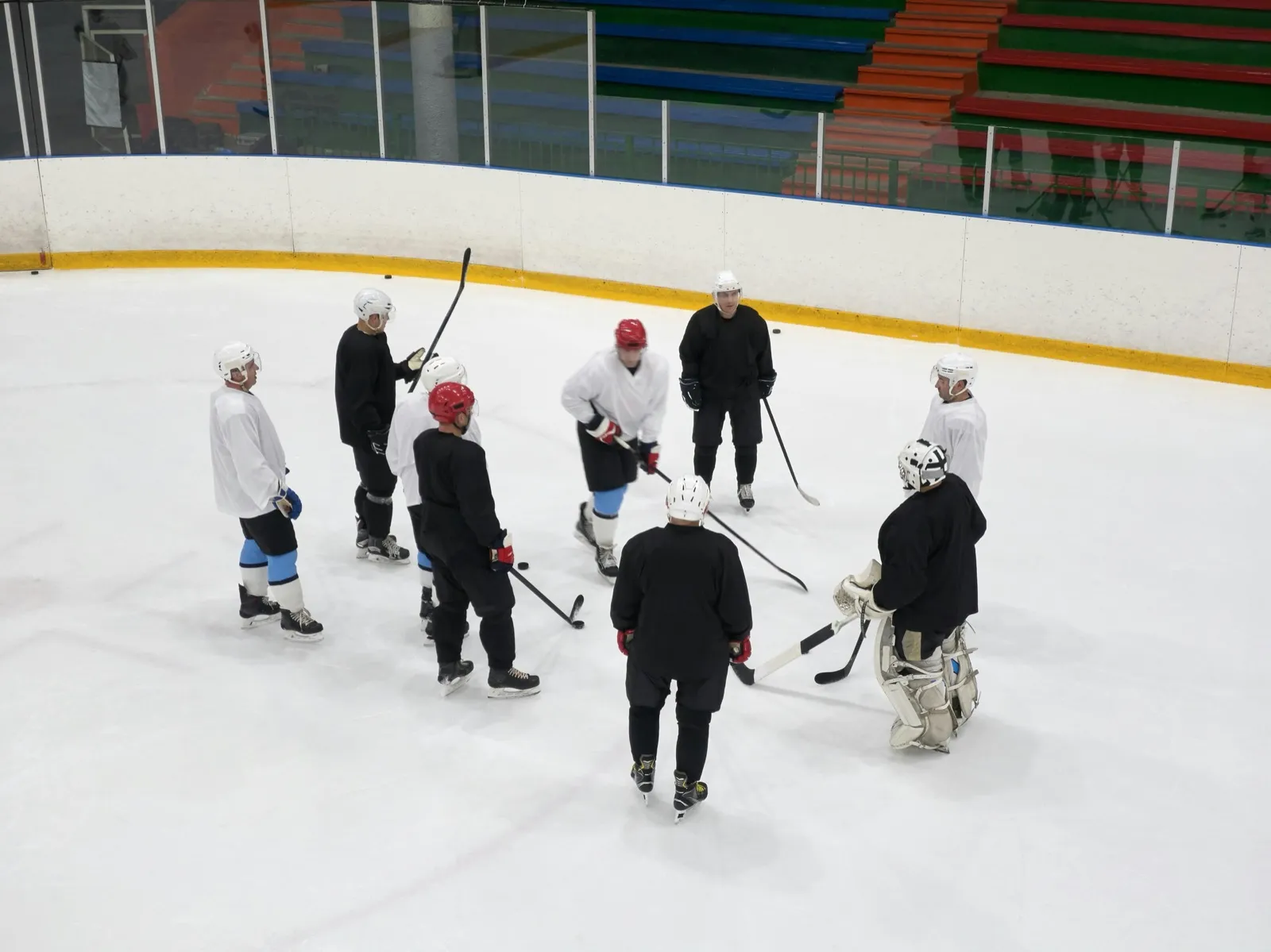
NCSA and hockey-native channels solve different problems.
NCSA is strongest at coordination. Hockey-native channels are strongest at evaluation.
- NCSA profile/messaging: helps manage communication and keeps recruiting admin in one place.
- USHL/NAHL ecosystems: create repeated live-evaluation opportunities over full seasons.
- NAHL Showcase and USHL events: concentrate decision-makers in one place.
- Direct athlete outreach + questionnaires: still essential at every division level.
Parent experience in hockey forums reflects this split. One parent in a hockey thread said: “We have had friends pay $3,000 for their kid. It didn’t really help the daughter.” The same thread emphasized where value did come from: “What did help was getting to National Development Camp and being seen by college scouts.”
That’s the key distinction. In hockey, a service can improve your process discipline, but it cannot manufacture the right playing level, event exposure, or coach-fit timing.
For the full sport pathway, see hockey college recruiting.
Cost vs. value for hockey specifically
If you pay for NCSA before clarifying your athlete’s pipeline fit, you risk buying confidence instead of progress.
NCSA pricing is generally handled through call-based quoting rather than a fixed public menu. That means families need to pressure-test value themselves.
| Spend option | What it gives you | Hockey-specific value check |
|---|
| NCSA paid tier | Profile tools, messaging workflow, recruiting guidance | Useful for organization; limited if your athlete still lacks the right exposure channel |
| Junior/showcase investment | Live evaluation by hockey decision-makers | Often closer to how men’s D1 opportunities are actually created |
| Direct outreach system | Athlete-led coach communication and follow-up | High value across divisions when done consistently |
| Advisor/consultant support | Personalized planning help | Can help if hockey-specific, credible, and NCAA-compliant |
A practical test: if you removed NCSA tomorrow, would your athlete still be in the right development and exposure environments? If the answer is no, that is the priority problem to fix first.
Before any decision, read how much NCSA costs and the NCSA free vs paid tiers breakdown so you know exactly what you’re paying for.
Alternatives for hockey recruiting
If you decide NCSA is not your first spend, you still need an operating plan.
For men’s D1-focused families:
- Prioritize level fit and progression in junior pathways
- Target named exposure channels (USHL events, NAHL Showcase)
- Run disciplined athlete-led outreach with film/schedule updates
For women’s hockey families:
- Build around league/showcase quality and realistic conference fit
- Execute earlier communication windows with cleaner targeting
- Use event strategy and direct coach contact as primary levers (including USA Hockey select-festival style visibility paths where relevant)
For D2/D3/NAIA/ACHA pathways:
- Emphasize fit, academics, and coach communication quality
- Use lower-cost systems that keep outreach consistent
- Avoid paying for features you won’t use weekly
If you want alternatives to NCSA specifically, NCSA alternatives covers the practical options by family type and budget.

The bottom line
NCSA hockey is not automatically a bad decision. It is usually a secondary decision.
For most families, the primary decisions are development environment, exposure channel, and realistic division targeting. If those are wrong, a recruiting platform will not rescue the process. If those are right, NCSA may add structure, but it still has to beat lower-cost alternatives on clear, hockey-specific value.
If you’re still weighing the broader question, read is NCSA worth it. For cost context, use how much NCSA costs. For the full hockey pathway, start with hockey college recruiting. And for what families use instead, see NCSA alternatives.